Adjectives are the heavy lifters of description. They modify nouns. Think of them as the paint on a sculpture. Without them, everything is just raw material.
Take this simple example: la casa pequeña (the small house).
The word casa (house) gives you the object. It tells you what we are talking about. The word pequeña (small) changes everything. It adds a quality. It defines the size. It narrows the focus.
This is what adjectives do. They attach qualities to nouns. They add characteristics. They can even show relationships.
Beyond Simple Description
Most people think adjectives are just for size or color. That is only the start. They modify the noun by adding layers of meaning.
- Qualities : Fast, slow, bright, dull.
- Characteristics : Wooden, plastic, fragile.
- Relationships : My, your, Spanish, global.
In Spanish, they often follow the noun. La casa pequeña works because the adjective comes after. It modifies the noun that precedes it. This order matters. It changes the rhythm of the sentence.
Why This Matters for Learners
If you only memorize vocabulary words, your sentences will feel flat. You will have the objects, but not the texture. Adding adjectives is the difference between stating a fact and painting a picture.
Adjectives don’t just describe. They define the relationship between the object and the world.
Consider how much more specific you can be. Instead of a car, you have a red car. Instead of a day, you have a rainy day. The noun stays the same. The meaning shifts entirely.
This modification is not optional. It is necessary for clear communication. You need to know which adjective to use. You need to know where to place it. Without that, your message gets lost in the noise.
The Mechanics of Modification
How does it work? You take a noun. You select an adjective that matches. You attach it.
In la casa pequeña, pequeña agrees with casa in gender and number. This agreement is key. It links the two words. It creates a single idea.
Students often struggle with placement. In English, adjectives usually come before the noun. In Spanish, they often come after. This shift can feel awkward at first. But it opens up new ways to emphasize.
Place the adjective before the noun for emphasis or subjectivity. Place it after for a factual description. Una casa pequeña is a small house. Una pequeña casa feels more personal. It highlights the smallness.
Practical Steps for Better Sentences
Stop thinking of grammar as rules. Start thinking of it as tools. Adjectives are your brush.
- Identify the noun : What are you describing?
- Choose the quality : What is the most important trait?
- Select the adjective : Find the word that matches.
- Check agreement : Does it match gender and number?
- Place it : Before or after? Depends on what you want to highlight.
This process is repetitive. It becomes muscle memory. You will start seeing the world
The Difference Between Being and Staying
Adjectives don’t just sit there. They do work. They modify nouns, sure, but they also change how we perceive the thing being described. Think of them as lenses. Some lenses clear up the image. Others tint it.
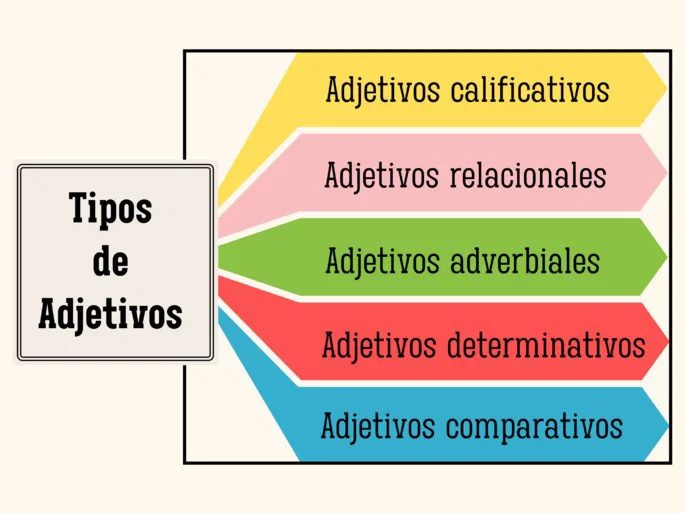
There are five main types of adjectives. You’ve likely heard of them. Qualifying. Relational. Adverbial. Determinative. Comparative.
Here is the catch. These categories aren’t locked in stone.
Some adjectives move between types depending on where they sit in a sentence. Take the word nueva (new).
- Su casa nueva (qualifying)
- Su nueva casa (determinative)
The word is the same. The job is different.
Adjetivos calificativos (Qualifying Adjectives)
These are the heavy lifters. They give the noun its personality. Its texture. Its vibe.
Una niña alta.
Caballos rápidos.
They add qualities. And because they add qualities, they have structure. You can grade them.
A person can be guapísima. An object can be bastante grande. They function as attributes or predicative complements.
Julia es muy inteligente. (Attribute)
Llegó radiante a la fiesta. (Predicative complement)
But not all qualifying adjectives work the same way.
Episodic vs. Permanent
Some adjectives describe a state. A moment. A temporary condition.
These are adjetivos de estado. Also called episodic or resultative. They usually hang out with the verb estar (to be in a state).
- Juan está enfermo.
- La ventana está rota.
- La ropa está limpia.
The cleanliness isn’t a trait of the clothes. It’s a current condition.
Then you have adjetivos de individuo. These are permanent. Inherent. They describe who or what something is, not just what it’s currently doing or being.
They pair with the verb ser (to be).
- María es morena. (This is her nature.)
- El gato es ágil. (This is its capability.)
- La casa es enorme. (This is its fixed attribute.)
There’s a third subset here. Epithets. These are poetic. They highlight characteristics so specific to the noun that they feel essential.
Se sentó sobre el frío mármol.
Se reflejó en las cristalinas aguas.
The coldness of the marble. The crystal-like clarity of the water. They aren’t random observations. They are defining features.
The Qualifying Toolbox
You can spot a qualifying adjective by its versatility. It can describe size. Color. Mood. Texture. Danger. Taste.
Here is a breakdown of the vocabulary available to you.
Descriptors of State and Size:
– bajo
– elevado
– abierto
– cerrado
Sensory and Physical Traits:
– salado
– fresco
– húmedo
– suave
– luminoso
Behavioral and Abstract:
– interesante
– atractivo
– feroz
– estricto
– peligroso
– educado
– aplicado
Colors and Tastes:
– azul
– marrón
– dulce
– amargo
– delicioso
Seeing It In Context
Words look different when they’re moving. Here is how they function in real life.
- The hotel was apacible, **