Un verbo es más que una simple palabra. Expresa una acción, como correr. Indica un estado, como ser. O describe un proceso, como crecer. Es el núcleo del predicado en cualquier oración. Sin él, la frase se queda flotando.
¿Por qué son tan importantes? Porque los verbos cuentan quién realiza la acción, cuándo ocurre y cómo se desarrolla. No solo dicen qué pasó. Dicen cómo se vivió ese momento.
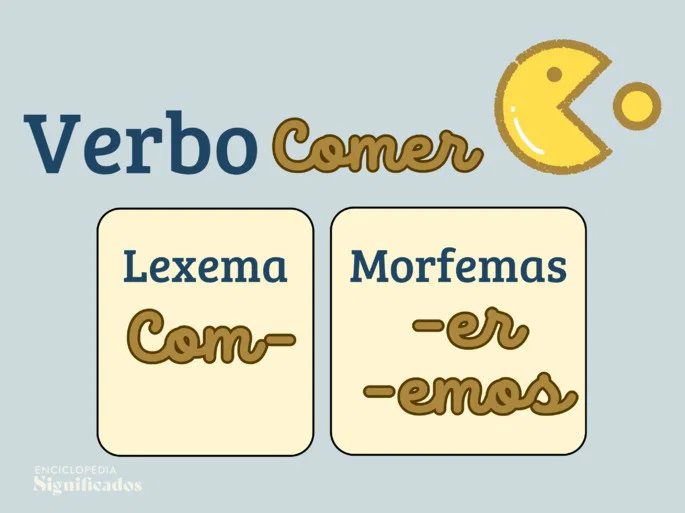
Para entender cómo funcionan, hay que mirar su estructura. Un verbo se compone de dos partes principales.
- Un lexema o raíz. Esta parte contiene el significado básico. Piensa en com- en comer. Esa sílaba es la esencia de la palabra.
- Morfemas gramaticales. Estos son los modificadores. Indican persona, número, tiempo, modo, aspecto y voz. Por ejemplo, el sufijo -emos en comemos. Ese pequeño agregado señala que es primera persona del plural, en presente de indicativo.
La raíz dice qué. Los morfemas dicen quién, cuándo y cómo.
Es una división simple, pero poderosa. Cambia el sufijo y cambias toda la información gramatical de la frase. La raíz permanece igual, pero el contexto cambia por completo.
How Spanish verb accidents change meaning
You already know the verb adapts to the sentence. Now look at the specific levers it pulls. These are the accidentes del verbo. They tweak the grammar to fit person, number, time, aspect, voice, and mood.
It sounds dry. It is not.
Who is acting? Person and number
The verb tells you who is doing the work. It also tells you if that person is acting alone or with a crowd.
- First person singular : Camino todas las tardes en el parque.
- First person plural : Nosotros viajamos cada año a Alemania.
- Second person singular : Tú eres un gran amigo.
- Second person plural : Ustedes bailan muy bien.
- Third person singular : Jaime visita a su abuela cada sábado.
- Third person plural : Ellas conversaron toda la jornada.
Simple. The ending changes. The meaning sharpens.
When does it happen? Time and aspect
Time places the action on a calendar. Present, past, future.
Aspect is sneakier. It tells you if the action is finished or still rolling.
- Imperfective : The action is in development.
- Leo muchos libros.
- Mi padre leía cuentos de terror.
- Leeré un libro cada mes.
- Perfective : The action is complete.
- Ayer leí un artículo.
- El domingo habré leído todo el capítulo.
Why does this matter? Because “I read” and “I was reading” paint different pictures. One is a dot. The other is a line.
Who does what to whom? Voice
This is about agency.
- Active voice : The subject does the action.
- Ana prepara la cena.
- Passive voice : The subject receives the action.
- La cena es preparada por Ana.
- Reflexive voice : The subject acts on themselves.
- Ana se prepara la cena.
Switching voices changes the focus. Not the fact. The focus.
How real is it? Mood
Mood reveals the speaker’s attitude. Is it fact? Wish? Command?
Indicative
This is for concrete reality.
– Yo juego.
– Yo jugaba.
– Yo he jugado.
– Yo jugaré.
– Yo jugaría.
Subjunctive
This is for doubt, desire, or fear.
– Yo ame.
– Yo amara or amase.
– Yo haya amado.
– Yo hubiera amado.
Imperative
This is for orders and requests.
– Ama aquello que haces cada día.
– Amad/amen para ser felices.
– No ames sin conocer.
– No améis/amen a las malas personas.
Notice the shift. Indicative states. Subjunctive hedges. Imperative pushes.
How to conjugate regular verbs
Regular verbs follow a pattern. You look at the infinitive ending.
- First conjugation (-ar) : amar, saltar, caminar, arrastrar, cantar, bailar.
- Second conjugation (-er) : temer, correr, comer, suceder, ceder, beber.
- Third conjugation (-ir) : partir, vivir, morir, sacudir, ir, existir, corregir.
Irregular verbs break the rules.
They might mutate the root. Poder becomes puedo.
Or they mess with the ending. Ser becomes soy.
Formas no personales: The non-personal forms
These forms do not change for person or mood. They only carry aspect.
Infinitive
It acts like a noun.
– Comer bien es fundamental para la salud.
– Puedes venir a vernos.
– Me gusta cantar en la ducha.
Gerund
It acts like an adverb. It shows action in progress.
– Los músicos murieron tocando en el barco.
– Llegó corriendo a clase porque era tarde.
– No fui a clase porque me quedé durmiendo.
Participle
This is the only non-personal form that bends for gender and number. It acts like an adjective. It signals completion.
– La cámara está estropeada.
– Es la canción mejor interpretada del show.
– Tenemos la mesa reservada y el menú escogido.
The verb does so much work. It holds the who, the when, the how, and the attitude. Master these accidents, and you stop guessing. You start controlling the meaning.
How to spot regular verbs in Spanish
You know a verb is regular when the root stays exactly the same. Amar becomes amo. It becomes amaba. It becomes amé. Comer works the same way. Como, comía, comí. No surprises. The stem doesn’t shift. The endings follow the standard pattern. That is the whole test.
Why irregular verbs break the rules
Irregular verbs are where things get messy. The root might change. The endings might change. Both might happen at once. Dar becomes doy in the present. Saber jumps to sé. You have to memorize these forms. They do not follow the logical grid.
Which verbs are defective?
Defective verbs are incomplete. They do not have forms for every grammatical person. Two types exist. Impersonal verbs describe weather or atmosphere. They have no real subject. Amanece a las seis y media. The sun does not “wake up” as a person. It just happens. Ocurrió durante la madrugada. Something happened. No specific actor.
Unipersonal verbs are different. They usually sit in the third person. Hay pan caliente todo el día. Hay does not conjugate for “I have” or “you have”. It just is. That is the distinction.
How copulative verbs link ideas
Copulative verbs do not show action. They connect. They glue the subject to a description. Los ciclistas son muy competitivos. The verb son carries no physical act. It just states a condition. Laura parece buena chica. Parece links Laura to her perceived trait. Estoy ocupada ties the speaker to a state of being. These verbs answer “what” or “who”, not “what did they do”.
The difference between transitive and intransitive verbs
This is where meaning splits. Transitive verbs need a direct object to make sense. The action travels from the doer to the receiver. Ana hace velas. She makes what? Scented candles. Jorge come una manzana. He eats what? An apple. If you remove the object, the sentence collapses. Jorge come is incomplete. It feels like a sentence waiting for the next word.
Intransitive verbs do not need that object. They are complete on their own. Ustedes gritan demasiado. You can stop there. The action is fully expressed. Mañana viene Daniel a casa. Daniel arrives. No object needed. Siempre lloro con esa escena. I cry. The act of crying is self-contained. It does not transfer to another noun.
The verb llorar is intransitive. You do not cry a tear. You cry. The distinction is small, but it changes how you build the sentence.
Where to find more details
If you are stuck on the specific list of irregular forms, look up dedicated conjugation tables. For the grammar side, check out resources on nouns and adverbs. They often pair with verb exercises. The classification helps you parse a sentence quickly. Regular, irregular, defective. Copulative, transitive, intransitive. Once you see the pattern, the structure of