You know that sound.
It happens right when you need it least. You press a button. Then—SCHLURK.
It is loud. Aggressive. Violent.
You are six thousand miles from home, cruising at thirty-five thousand feet. A baby is crying in 4B. You are wedged into the middle seat. Your ears have stopped popping, but now your bladder is protesting.
You navigate the narrow aisle. You slide the tiny door open.
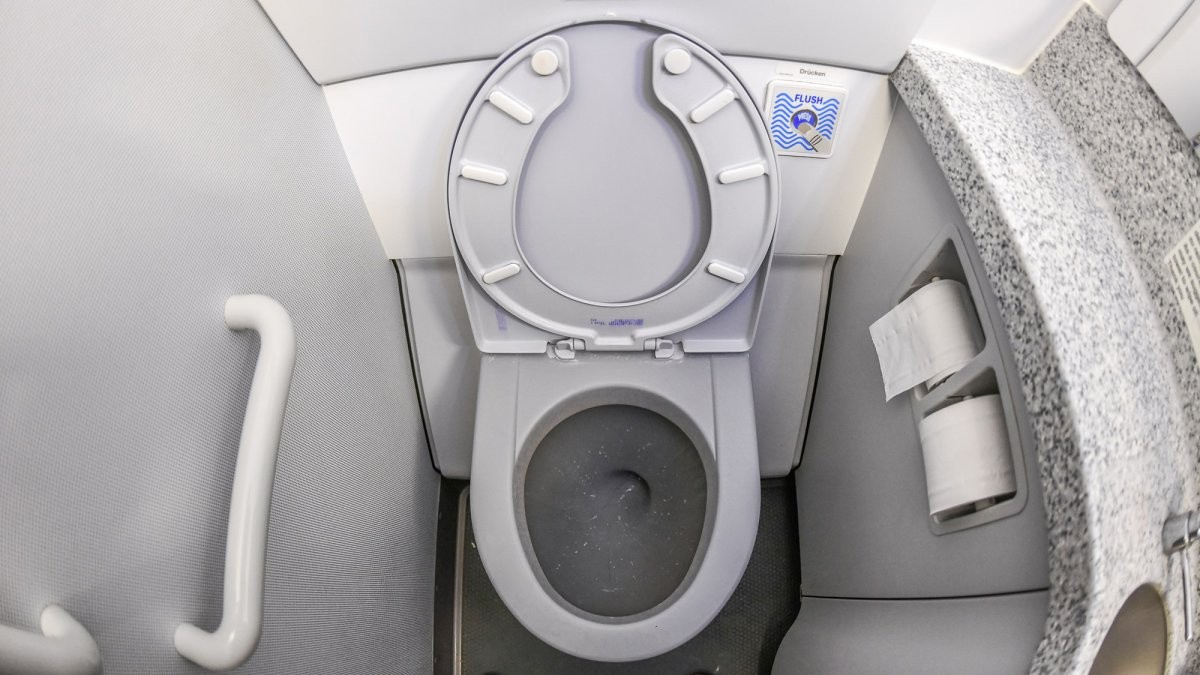
It is not a bathroom. It is a closet. A very clean, very plastic closet.
You sit. You hope. You push.
That noise returns. And for a split second, your brain betrays you.
Is the vacuum sucking me into the ceiling? Am I about to become part of the jet engine intake?
No. You are safe. The toilet is too weak to eat you. But what you are hearing is one of the most elegant bits of engineering in aviation history.
And yes. It smells.
The Early Years Were Brutal
We assume toilets have always been civilized. We assume that because we wear jackets with patches on the knees, the experience was somehow noble.
It wasn’t.
Early aviation was a logistical nightmare. Short flights. Low altitudes. No bathrooms.
Pilots literally peed in their shoes.
Imagine that. A pilot. High-flying hero of the golden age. Leaking urine into his left oxford. Then tossing the wet footwear out the window. Or punching a hole in the floor and aiming for the grass below.
Glorous.
As commercial flight scaled up in the 1920s and 30s, airlines tried to fix the problem. Their first solution? Buckets.
Just buckets. In the back of the plane.
If you flew then, you weren’t a passenger. You were a volunteer for a bucket brigade.
Later, the Douglas DC-4 introduced enclosed stalls. Enclosed, yes. But primitive. The bowls were removable. Crews had to haul full toilets out of the plane and dump them manually after landing.
Chic? No. Hygienic? Barely.
Then came chemical toilets. Bright blue tanks filled with disinfectant. This era gave birth to aviation’s grossest myth: Blue Ice.
Blue ice is a misnomer. It doesn’t sound bad. It sounds cool. Sci-fi even.
But it is frozen waste.
If a tank leaks at high altitude, the air is so cold that excrement freezes instantly. It sticks to the hull. Later, as the plane descends and warms, chunks break off.
Poop raining from the sky.
It is rare. Very rare. Modern systems seal it better. But it happened.
How the Vacuum Actually Works
Today’s planes don’t use buckets. They don’t rely on water weight. Water is heavy. Heavy planes burn more fuel. Fuel costs money. Money hurts airlines.
So they use air pressure.
Here is the trick.
Your cabin is pressurized. You need air to breathe at forty thousand feet. Outside the skin of the plane, the atmosphere is thin. Nearly nothing there.
That difference? That is energy.
When you hit flush, a valve opens. The pressure inside the cabin pushes everything downward, into the lower-pressure waste tank below the floor.
Fast. Very fast.
The wind roars. The liquid moves at hundreds of feet per second.
This creates the noise. That violent inhale. It is pure physics.
It uses almost no water. Just enough blue chemical liquid to rinse the bowl. Mostly, it relies on the force of the outside world pushing against the inside.
Lightweight. Efficient. Loud.
And still.
You can’t be sucked up. The suction isn’t strong enough for a human. But it is strong enough for debris.
Do not flush the trash. Do not flush the can. Do not flush your pride.
Plumbers found diapers in these tanks. Soda cans. Silverware.
A clogged line grounds a plane.
A single soda can can delay a flight for days. Mechanics have to crawl into cramped spaces, fix the piping, and restart the schedule. All because someone thought, it’ll fit.
It doesn’t.
The Honey Truck
Once the plane lands, the work isn’t done.
The waste stays onboard until touch down. Planes do not dump sewage mid-air. (Except for that rare, horrifying blue ice exception. But we aren’t talking about that.)
On the ground, a truck approaches.
It is called a honey truck.
Yes. A honey truck.
The name is a lie. It pumps out human waste into large holding tanks. The fluids then get trucked to wastewater facilities.
Ground crews connect hoses. They pump the guts of the aircraft out. It is the unseen rhythm of every major airport. A silent, smelly ballet of maintenance.
Cute?
Some people find it cute. Like a WALL-E subplot happening on the tarmac while you sip coffee at Gate 12.
You may disagree.
Even Space Has Problems
It isn’t just commercial jets. Space has it harder.
Microgravity means “down” is a suggestion, not a rule.
When NASA launched Artemis II to the Moon recently, the crew’s toilet fan broke hours into the flight.
No fan? No suction. Urine floats.
Christina Koch, the commander, fixed it with help from Mission Control. They got the system back online quickly. Backup urine bags were on standby—Apollo style, Neil Armstrong would’ve approved.
But it highlighted the fragility.
Four people. Ten days. One toilet.
If the engineering fails, you are stuck with floating biology.
Back on Earth, your vacuum flush saves weight, saves fuel, and saves the plane from crashing.
But that noise.
That terrifying, industrial SCHLURK will haunt you forever.
Next time you are on a flight, listen to it.
It is not magic. It is pressure.
But it sure is loud.