Colossal Biosciences just showed off their “artificial egg.” They say it brings us one step closer to bringing back the dodo. Or the moa. You know. The extinct birds we lost because humans are bad at keeping things around.
Scientists aren’t buying it. Not the hype, anyway.
Victoria Herridge, an evolutionary biologist from the University of Sheffield, put it bluntly. “Nothing will ever bring back a mambmoth; nothing will ever bring back the dodo.” Extinction is not a loading screen. It’s over. Forever.
Silicone, not shell
The tech itself? It’s kind of neat, technically. Colossal built a semi-permeable silicone membrane. It sits in a rigid hexagonal cup. The whole thing keeps moisture in and oxygen flowing. No shell required.
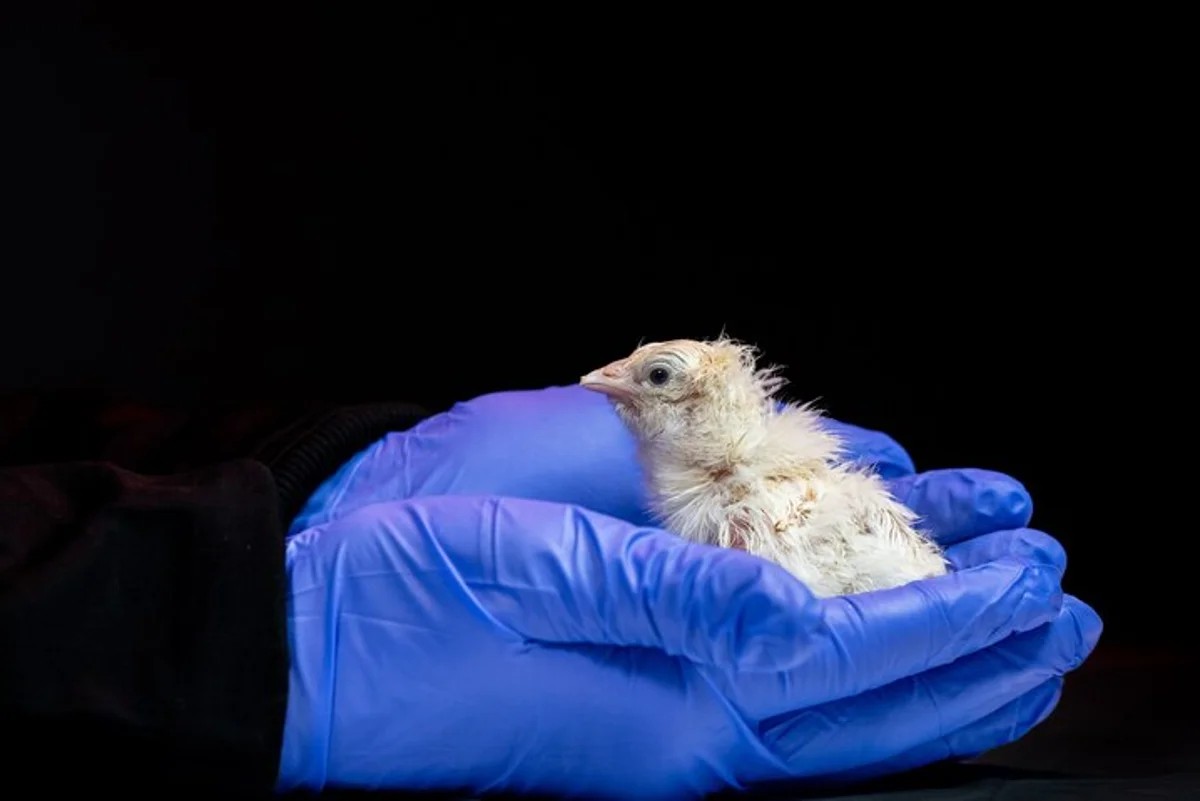
Birds can’t use the “borrow a uterus” method mammals use for de-extinction experiments. They need an egg. So this is a workaround. Colossal claims it works for any egg size. Hummingbird to giant moa. They say they hatched twenty-six chickens using this system.
The company says the chicks were “healthy.”
That’s it. That’s all we got. No peer-reviewed papers. No data on how many eggs failed. No long-term health reports on those chickens. When asked for specifics, Colossal went quiet. They haven’t released any datasets. Independent scientists haven’t even looked at the methodology.
If Colossal’s hatch rate is actually higher than nature, then it might be useful. For conservation.
A distraction or a tool?
Mike McGrew from Edinburgh thinks the low success rates of previous artificial shells are the bottleneck. If this tech solves that, maybe it helps save emus. Or ducks. Or the kea, an endangered New Zealand parrot. Nic Rawlence suggests Colossal focus on breeding living species. Like the kea. That seems like a better use of time than chasing ghosts.
Then there’s the elephant in the room. Well. The chicken in the shell.
Chris Elphick, an ornithology professor, looks at this and sees a lot of trouble for little gain. His take? Colossal is probably just cracking open real eggs and pouring them into their fancy plastic cups. If you already have the embryo inside the real egg, why bother transferring it? It adds steps. It adds cost.
Michael Parr from the American Bird Conservancy points out that captive breeding works fine for species like Hawaii’s ‘Akikiki. We’re increasing numbers. We don’t need a high-tech egg substitute.
What’s breaking isn’t the breeding. It’s what happens after.
When you release them into the wild, the wild isn’t there anymore.
Why they went extinct
Here is the thing experts keep coming back to. Habitat destruction killed these animals. Putting them in a lab egg doesn’t put the forest back.
Chris Elphick asks a question we all should. Where are you going to put them once they hatch? The moa didn’t disappear for no reason. Humans changed the environment. Bringing the bird back without bringing the home back is a pointless exercise.
Herridge hates the term “de-extinction” for this reason. These aren’t lost friends coming home. They are synthetic biology experiments. They are novel organisms. Colossal admits this themselves. Their chief science officer, Beth Shapiro, said the dire wolf pups were actually just gray wolves with a few gene tweaks. Twenty edits. Not 100 percent identical.
We are creating something new. Calling it an “old” animal is a branding choice.
Dreaming vs. doing
This tech lets us daydream. We picture herds of mammoths or flocks of dodos. It feels cinematic. But it ignores the real problem.
Elephants need conservation right now. Today. On a warming, crowded planet. The synthetic egg doesn’t solve for biodiversity collapse. It doesn’t stop poaching. It doesn’t fix the climate.
Herridge says the work doesn’t address any underlying problems facing wild places today.
It’s just a mirror. A shiny, expensive one that shows us what we wish we had saved, instead of what we’re still in time to fix.