Remember the big deal about 1GB in 2004?
It seems ancient now. That little white space was a miracle then, and today Google sits on a mountain of user data that feels like an afterthought. We let them in. We signed up. Now Gmail is just there, tangled up with Maps, Photos, Drive, the whole ecosystem.
If you want to leave? Good luck finding a home that doesn’t ask for more than your password. Apple is one door. Microsoft is another. Both are big. Both watch you, just in different hats.
But Proton Mail is different. It doesn’t want your data. It wants to protect you from the rest of them. We’ve compared their docs before. Now we look at the email itself. The thing you open every morning. Is the switch worth it?
“You’ll never see a single advert.”
The Cost Of Privacy
Here are the hard numbers.
Gmail gives you 15 gigabytes free. Shared, obviously. With Drive and Photos, so really it’s less. Proton starts with one. One gigabyte. If that sounds tight, it is.
The price gap widens fast.
Gmail Basic costs roughly $1.99 a month. Proton’s entry tier is nearly triple that, sitting at $4.99. You pay more. Why? Because Google gives you AI tools and storage bloat. Proton gives you privacy features and access to their whole suite. Their VPN. Their calendar. Their encrypted drive.
Think about third-party apps. If you live in Apple Mail or Outlook, Gmail bows out gracefully. A few clicks and it’s done. Proton makes you work for it. You need the bridge. A special app. End-to-end encryption requires this extra layer of friction. It keeps even Proton out of your inbox. A feature, really, depending on your perspective.
What You Can And Can’t Do
On the surface? They look the same.
Gmail is free with labels. Proton is free but locked down. On the free plan, Proton restricts filters and labels. You can’t send more than 150 emails a day. It feels stingy, but the logic holds. You’re not paying for the servers. Gmail pays for itself with your attention and data.
Pay for Proton? The doors open. You can link multiple email addresses into one inbox. Gmail doesn’t let you do that easily. You get scheduling, snoozing, forwarding. All the bells and whistles that come with the paid badge.
Gmail? It gives almost all of this away for free. Scheduling is built in. Filtering is powerful. It works right now, without opening a credit card. The tradeoff is the ad model.
Wait. The ad model?
Google scans. Proton hides.
Proton claims zero ads. Anywhere. In your inbox. In the sidebar. It’s gone. If privacy is your religion, Proton is the temple. Gmail is the shopping mall next door.
The Look And Feel
Does it matter what it looks like?
Not much, but it matters slightly.
Gmail feels polished. Tight. Especially on mobile, the experience is slicker, the transitions smoother. You know how to use it because you have used it since you were ten years old.
Proton is clean. Modern. Intuitive. But less fluid. The desktop app feels a little heavier. The mobile app feels functional but less refined. Keyboard shortcuts exist on both, which saves your fingers during heavy mail days. Integration with calendars and clouds? Solid on both ends.
Conversation threads? Yes, both bundle related messages. Both let you turn that feature off if you hate grouped chats. Small things. But in email, the small things add up to hours saved or hours lost.
Gmail wins the UI contest by a nose. It has been optimizing the user experience for two decades. Proton is still building trust, so it spends its energy elsewhere.
Who Can Read Your Secrets?
This is the whole point.
Privacy is where Gmail gets shy and Proton gets loud.
Gmail encrypts data in transit and at rest. True. But Google holds the keys. They can decrypt it if needed. Or if they need to show you an ad targeted to your life choices. Or if a government asks nicely. The message belongs to the network, technically speaking.
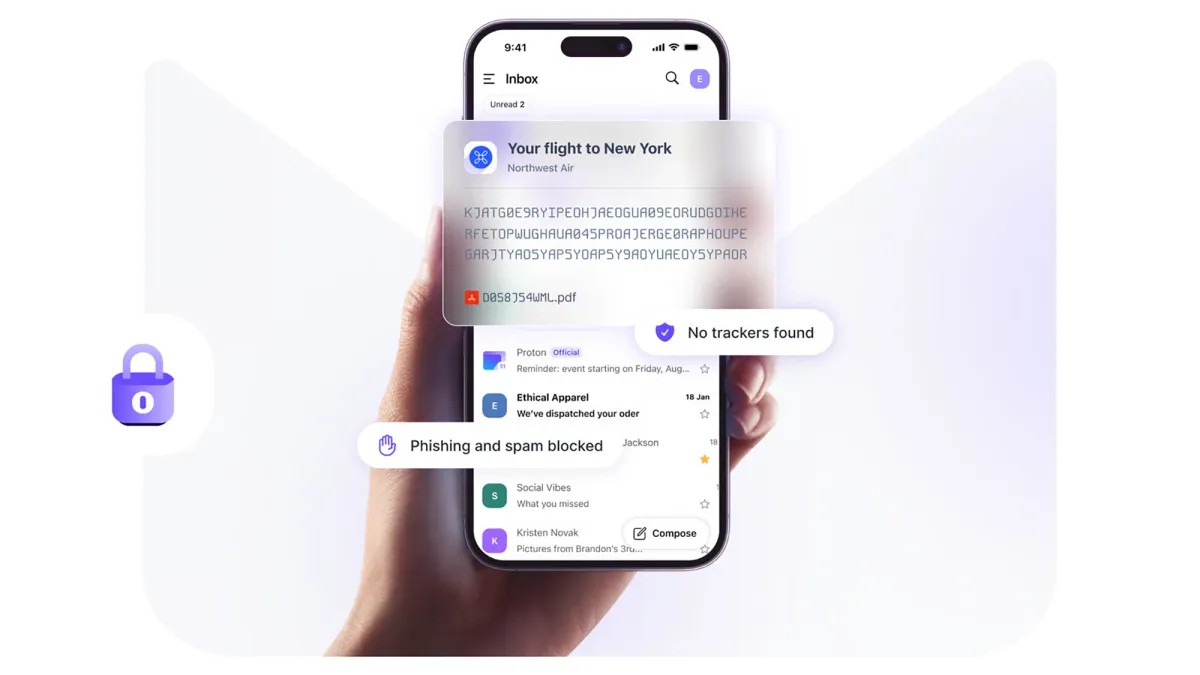
Proton uses end-to-end encryption. Always. Even the company can’t read your emails. They offer self-destructing messages. Password-protected emails. Expiration dates on your words. These features aren’t toggles you hunt for in settings menus. They are default. They are the product.
Both fight spam well. Both block viruses effectively. That is baseline expectation, not a differentiator. But Proton adds a free VPN to even its cheapest plan. Free. Not ad-supported. Just private browsing as part of the package.
Why?
Because they don’t need your data.
Gmail needs your data to survive. Proton sells peace of mind to people who realize they have too much.
Should You Switch?
There is no perfect choice. Only your tolerance for inconvenience.
Switching means friction. Telling your boss you have a new email. Telling your friends. Updating subscriptions that will inevitably get sent to your old Gmail because you missed one notification. The migration pain is real.
Is it worth it?
If you care about security—if the thought of algorithms profiling your Sunday shopping gives you anxiety—Proton is the only logical path. Pay the five bucks. Lock the doors. Live quietly.
But Gmail is the default for a reason. It works with everything. It fits in your pocket and your brain. You likely don’t care who reads the headers as long as the delivery is instant. 15 gigs of free storage is hard to beat, and the lack of friction is a luxury we rarely notice until it is gone.
Privacy has a cost. Not just in money. In habit.
Think about whether the price is high enough for your taste. The inbox waits either way. 📬