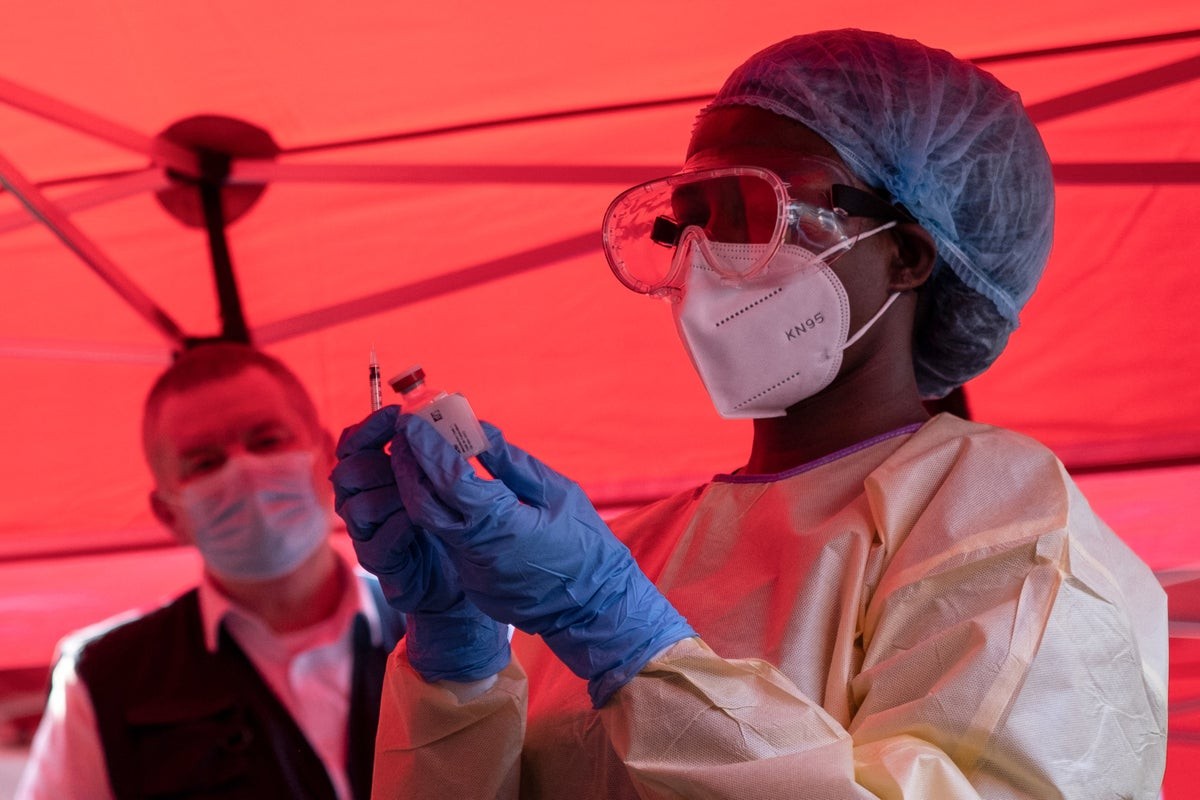
Fifty confirmed cases. Six hundred suspected.
The numbers are ticking up in the DRC and Uganda. It is Bundibugyo. A rare Ebola strain. A fast-spreading one. Health officials are running to catch up with it. Goma. Bunia. Cities with airports and highways. That raises the stakes. If it gets out of those regions the world has bigger problems.
But there is no vaccine ready to go. None.
“This species of Ebola is one for Which there is no licensed vaccine or treatment” said Anne Ancia of the WHO.
Direct quote. Harsh truth.
The Zaire Problem
We have six species of Ebola. Four hit humans hard.
But Bundibugyo? Historically it is a minor player. It causes outbreaks, yes. Few of them. That means scientists largely ignored it. They looked elsewhere.
Why? Zaire. The Zaire strain kills fast. It appears often. It got the money. The attention.
“Most of Ebola countermeasure development,” said Amesh Adalja of Johns Hopkins, “has been focused on Ebola Zaire.”
Traditional strategy. Pick the big threat. Fix it. Ignore the small one until it gets big. That worked until now. Now Bundibugyo is knocking on the door.
Adalja sees a bigger issue.
“Ideally, what you’d want… [is] a universal filovirus vaccine… That would be the holy grail.”
A universal shot. One vaccine. Every strain. Ebola and Marburg included.
Sounds good. It does not exist yet.
mRNA Hopes
The pandemic changed everything. mRNA moved from labs to every pharmacy on earth. Fast.
Now experts want that same speed for Ebola.
Shanelle Hall from Africa CDC says they are looking at options. Randomized controlled trials might happen soon in DRC and Uganda. Drugs like DP134 are on the table. So is Remdesivir.
None are running yet.
They are also reviewing vaccines. Ervebo is old news for Zaire, but does it help here? Maybe. Then there are the new kids. Moderna. Oxford. IAVI.
Moderna brings mRNA back into the conversation. Can this technology cover the gaps for rare strains?
“Scientists are reviewing these,” Hall says, “to come up with accelerated plans… for looking at effectiveness.”
Adalja is all in on the mRNA angle.
“Because of the speed,” he notes.
Make it fast. Change it fast. If you have to build a shot for a bug you don’t have a shot for yet, mRNA is top of the list. It is the logical choice.
Waiting For Data
CEPI is moving too. The funding body for pandemic prep has activated its emergency team. They want to coordinate. Fund. Build.
Nicole Lurie put it bluntly in a statement.
“Currently, there are no Bundibubyo-specific vaccine candidates in phase one… several are in preclinical development.”
Animals, not people. Not yet.
CEPI is hunting for manufacturers. They need to speed things up. Trial protocols are the bottleneck. Science moves fast. Regulation moves slower.
Adalja has a final thought. He does not like the strain-by-strain method anymore. It is too slow. Too messy.
“Think about the viral family as a whole.”
Target the parts that do not change. The conserved features. Ignore the tiny differences between strains. Aim at the family.
We keep playing whack-a-mole. Hit one virus. Another pops up.
Maybe we need a better hammer. Or maybe we just have to wait while the scientists figure out which hammer works.