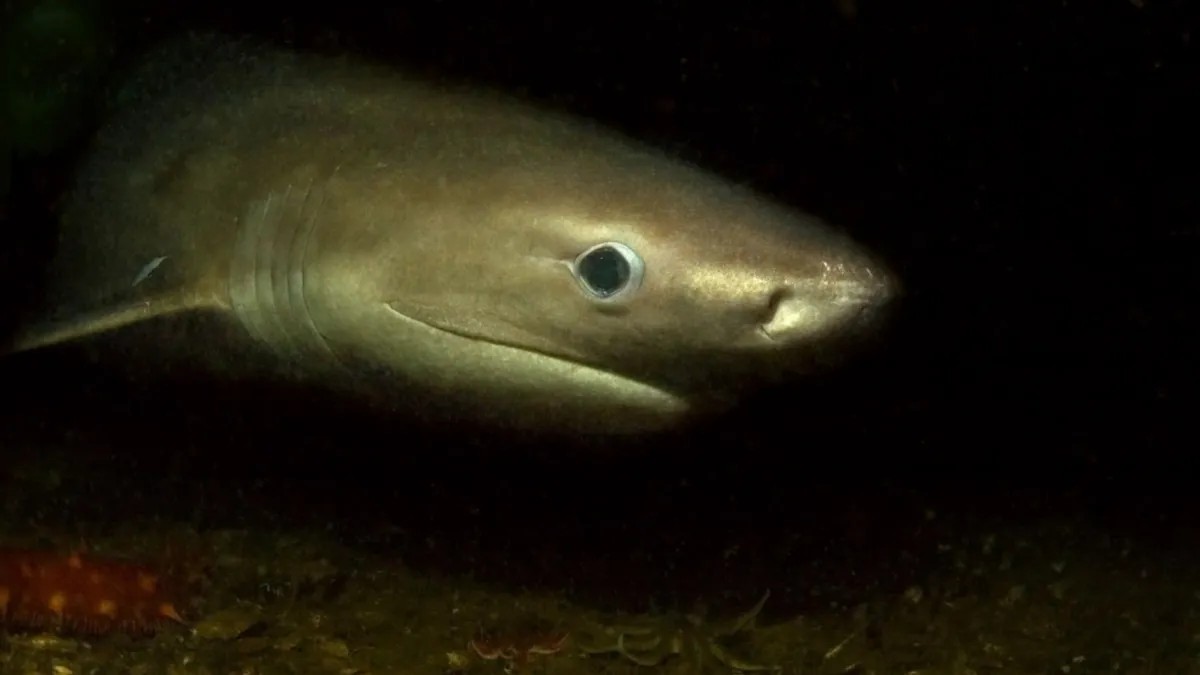
They have six gills. Most sharks have five. Just a small anatomical rebellion against the norm, really, but it’s the only thing people seem to talk about before getting lost in the dark. Hexanchus griseus isn’t just any fish, it is an ancient giant reaching up to 14 feet in some cases, a lineage that predates the T-Rex and outlasted the asteroid impact that wiped them out.
Yet here we are. Marine biologists are still stumbling around in the dark trying to figure them out.
The depth of ignorance
The problem, naturally, is location. Sixgills prefer the crush. Depths of nearly 10,000 feet where light gives up entirely, leaving them to haunt the abyss in solitude. Low visibility means low data, it’s as simple as that, so scientists haven’t been able to study them much.
Unless you are in Washington State.
Puget Sound is different. Here, these shadows come out of the deep every single year, surfacing in waters as shallow as 20 feet to give birth. Seattle Aquarium researchers have spotted this behavior repeatedly, confirming a thing called “birth site fidelity,” which is just a fancy way of saying they keep coming back to the same spot for the same reason. Over and over.
We think these patterns repeat until they leave. The consistency is the point.
Once the pups hit the water, Puget Sound becomes a nursery. A safe room in a dangerous world, for a while. No one knows exactly how long they stay. They linger in the southern parts of the Salish Sea during summer and fall, drifting north as winter bites at their heels.
They don’t go far. Less than two miles a day. At dusk they rise. At dawn they dive, presumably to find something to eat before the sun bothers them. It is a rhythm older than the hills themselves.
Flipping the script
From May to September the researchers go hunting. Or rather, waiting.
The team from the Seattle Aquarium hits three spots in Puget Sound, visiting each one a month, lifting these ancient beasts from the water with the kind of care usually reserved for fine china. They might haul the shark aboard, or hold it against the hull, then do something that sounds insane if you aren’t a scientist. They flip them upside down.
It triggers a trance. A biological switch that flips off, allowing the team to work while the shark floats, stunned and calm. Breath stays moving. All six gills get air, even the odd ones.
They work fast. Five to ten minutes max. They take measurements. Tissue samples. Photos. They attach tags that will track where the sharks go when they finally leave the sound, what they eat, how fast they grow, where they hide.
Then they put them back. Into the cold water, into the dark, back to being ghosts.
Dani Escontrela of the Seattle Aquarium says they want answers. To migration, to diet, to the messy intersection of human presence and these relict creatures. They aren’t doing it alone, they have help from state wildlife officials and other aquariums, but the goal remains singular. Learn more without harming them. Keep their health the priority, not the headline.
The ocean keeps its secrets well, even when it gives up its young. The sharks are back. The tags are on. We just have to see if anyone is looking at the data when it comes back, or if we’ll just forget again, as usual. 🦈