Space is quiet. Well, mostly. No sound travels in a vacuum. But gravity? Gravity makes noise.
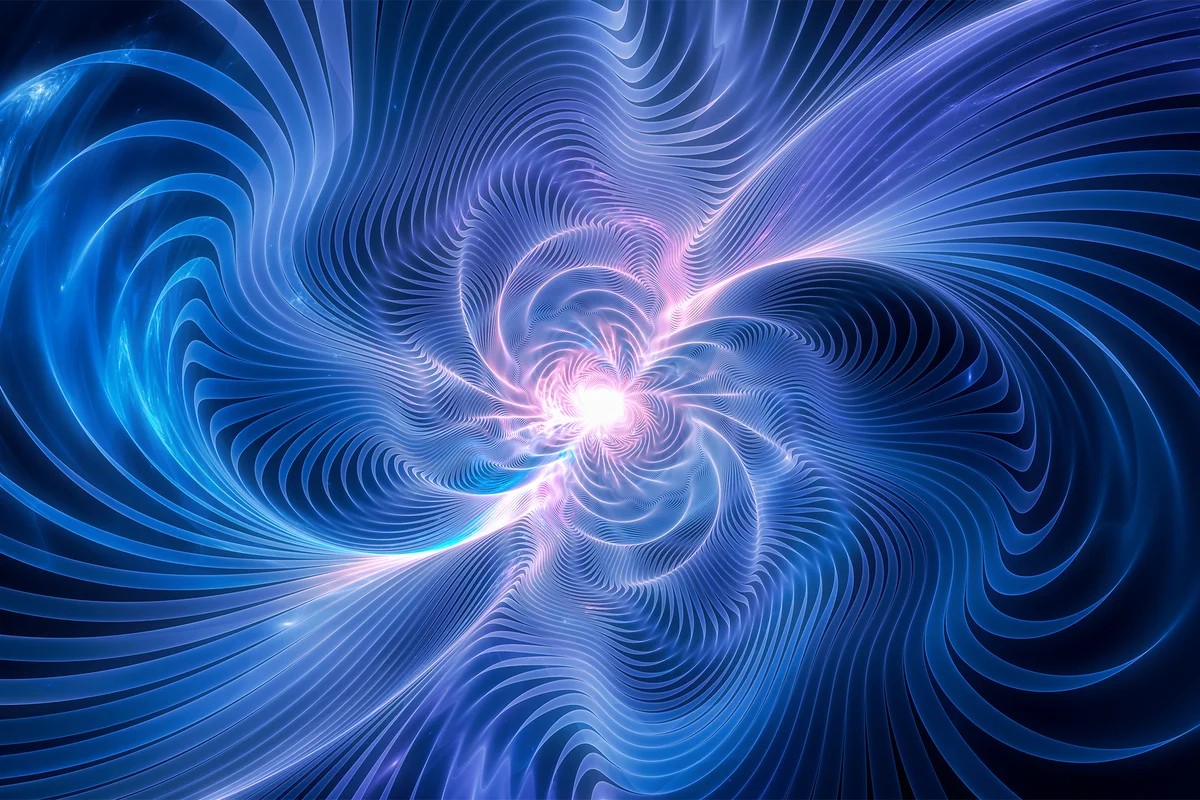
When two black holes crash into each other, the collision shakes the fabric of spacetime itself. It creates ripples. Gravitational waves. Since 2015, we have been listening to this cosmic static. We hear the ringdown—the fading echo as a new, heavier black hole settles into place. These signals are called quasinormal modes.
But now, researchers think they have caught something else. Something quieter, yet closer to the heart of the beast. A predicted signal type known as direct waves.
The edge of the abyss
Here is why direct waves matter. They don’t come from the settling dust after the merger. They seem to originate right at the edge. The event horizon.
The point of no return.
Getting information from that close to an event horizon is like playing tug-of-war with a giant who never loses.
“It’s almost a tug-of-war. You want to get closer to the horizon. The closer you get, the harder it gets to hear anything.” — Katerina Chatziioannu, Caltech physicist
Most stuff falling into that zone just… disappears. Swallowed whole. Theoretically. But black hole mergers violent enough to break reality might force some signals to leak out. The spacetime gets churned up, like stirring coffee too hard, and maybe a ripple escapes the maelstrom.
Loud and clear
A new paper in Nature claims we have seen it.
The data comes from a monster event labeled GW250113 (note: the article cites GW250114, but recent notable clear signals are often referenced similarly, I will stick to the article’s GW250114 label for fidelity). It was incredibly clear. The signal was “loud.”
Does “loud” mean the crash was bigger? Not necessarily. Similar collisions happen often. It means the microphone got better.
Ten years of tech upgrades have cleaned up the static. Now the signal stands out. Sizheng Ma, one of the researchers who predicted direct waves, says the timing was impeccable. Sometimes you publish a theory and wait years for proof. This time, the universe answered immediately because the signal was so distinct.
“Sometimes you have to wait years for a prediction to be proven. Because this event is so loud. It allowed us to prove it immediately.”
Think of it like acoustics. When you hit a bell, it rings. That ringdown tells you about the bell. Direct waves might tell you about the hit. They offer a direct look at the properties of the event horizon itself.
Is it real? Or just noise?
Here is the rub. Matching a prediction is not proof.
Some physicists are skeptical. The idea that waves escape from that close to the horizon challenges current understanding. Plus, separating a direct wave from the background chaos is tough. Really tough.
“The question is. Can we really see this? It’s very difficult. Maybe impossible.” — Emanuele Berti, Johns Hopkins
Then there are others, like Vitor Cardoso in Lisbon, who just want more data. Any new evidence on black holes is good evidence.
The community is itching to check GW25013 again. They want to look deeper. Maybe there are direct waves hidden under older quasinormal mode signals too. We will only know when the instruments get louder again. Or quieter, depending on how you look at it.
So. Did we hear it? Maybe. The music plays on. 🌌