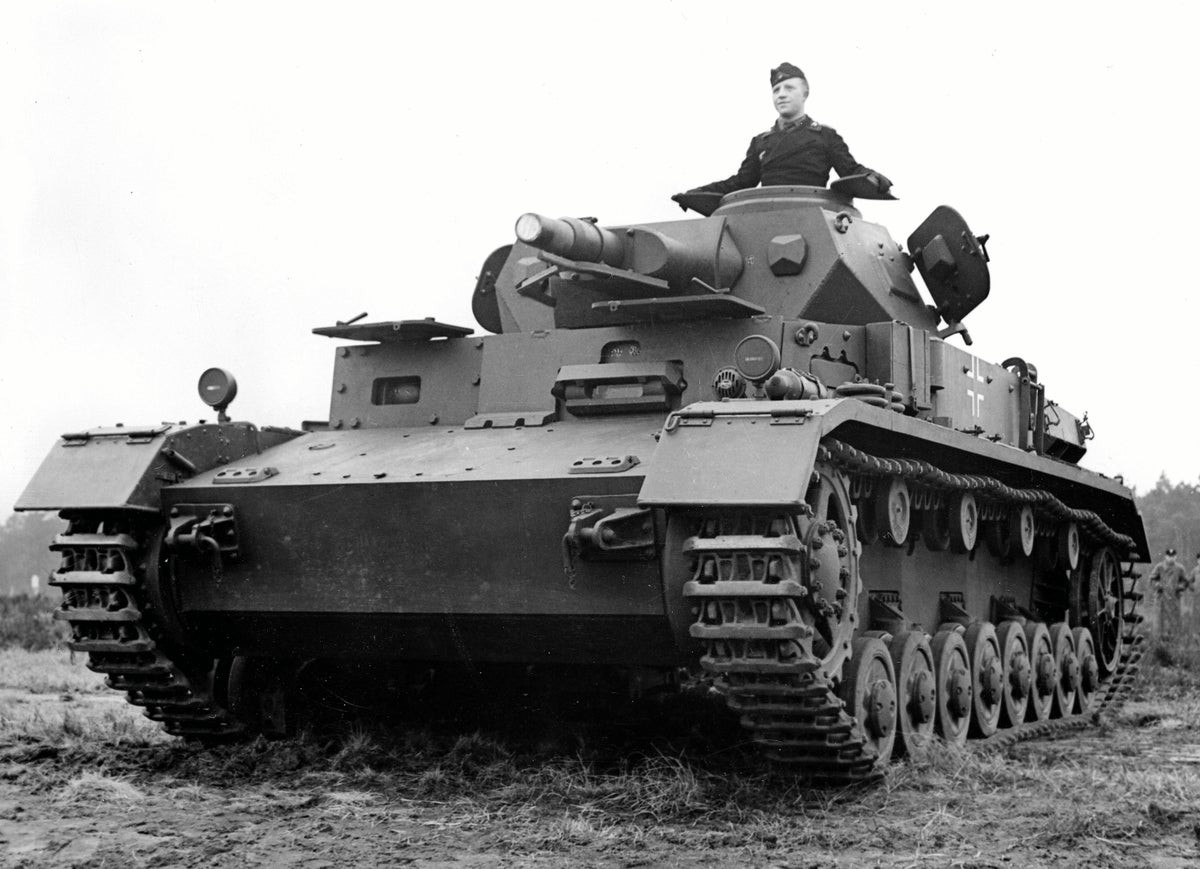
Operation Overlord wasn’t just about bravery. It was about data. When Allied forces hit the beaches of Normandy they were up against an unknown quantity of Nazi armor. Newer tanks. Harder to beat. The U.S., U.K., and Canadian intelligence agencies had a problem: they needed production numbers.
They turned to mathematicians.
Not generals. Statisticians.
The Serial Number Secret
Early in the war, Allies captured some German tanks. They tore them apart. Looking inside they found something useful: serial numbers.
They weren’t random. Chassis numbers were all over the place, messy. But the transmissions? Sequential. The gun mounts? Sequential. Even the road wheels had numbers in order. This tiny detail changed everything. By crunching those digits experts could estimate total monthly production. Their results beat every other intelligence guess hands down.
“The mathematical results for this so-called ‘German tank problem’ were significantly closer to the truth.”
Doing the Math
Let’s pretend. Suppose the Nazis have $N$ = 271 tanks. You don’t know that. You capture 15. Here are their numbers: 3, 7, 3, 17, …, all the way up to 242.
You know there are at least 271. Actually wait—the highest is 242 so you know there are at least that many. But probably more. How do you guess the total?
Four methods exist.
Method 1: The Median.
Take the middle number. In a list of 15 the eighth value is your anchor. For our example that’s 116. If this small sample perfectly reflects the big picture you double it and subtract one. $N_1$ = 231.
Bad guess. The highest tank we saw was 242. You guessed 231 total? That’s impossible.
Method 2: The Mean.
Add up all 15 captured numbers. Divide by 15. You get an average of 119. Double it, subtract one.
$N_2$ = 237.
Also impossible. Why? Because the mean pulls you down. Outliers mess it up. This method fails because it ignores the ceiling.
Method 3: The Gap at the End.
Look at the lowest number. It’s 3. That means two tanks came before it (1 and 2). Assume that same gap exists after the highest number. So if you’re at 242 add two more.
$N_3$ = 244.
Better. At least it’s possible. But still way off the real number of 271.
Method 4: Average Spacing.
This is the one that works. Calculate the average distance between each serial number you have. You look at the gaps between 3 and 7 between 7 and 17 and so on. You also account for the gap from 1 to your first number (3).
Mathematically it simplifies nicely. You take the highest observed number divide it by the count of tanks captured and subtract 1. Then add that average spacing to the highest number again.
$d \approx 15$.
Add 15 to your highest tank (242). You get 257.
257 vs 271. Not perfect but incredibly close compared to the other guesses. And compared to standard intelligence reports this method was terrifyingly accurate.
Why Method 4 Wins
How do you prove Method 4 is superior? Simulations.
Mathematicians call this Monte Carlo. You run the same scenario thousands of times. You change the true total $N$ each time. You grab random samples. You check the spread.
You’ll find Method 4 converges faster. The variance is smaller. The error margin shrinks. Allied mathematicians didn’t just get lucky. They picked the statistically best strategy available.
Wars aren’t won by weapons alone. Sometimes they’re won by looking at a serial number on a transmission and realizing the enemy is producing fewer tanks than feared.