July 4 is coming. NASA isn’t leaving us high and dry. No paper sparklers here. Just deep space. And it actually has sound.
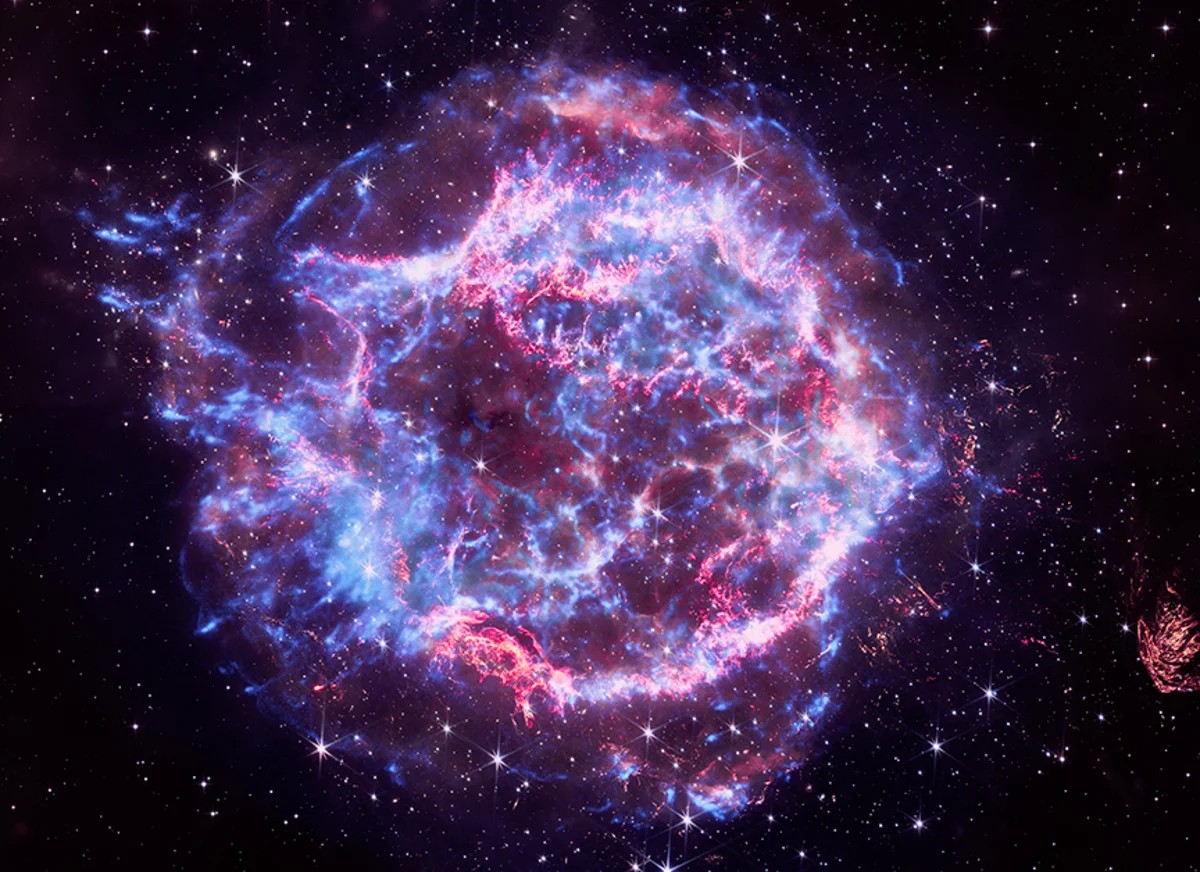
It’s a weird treat for the country’s 250th. The imagery is strictly red, white, and blue. Patriotic enough to make your stomach churn with nostalgia, maybe? The show features Cassiopeia A. It has the dusty NGC 360 nebula. Messier 94 shows up. Then there’s the ZwCl 00241652 cluster. Hubble did the heavy lifting. Webb helped. Chandra threw X-rays into the mix. Ground-based telescopes got a look-in. All of it combined. The goal was simple: a cosmic fireworks display that you can hear, too.
Sonification does the work.
Take Cassiopeia A first. It sits 11000 light years out. Silent in this particular batch. Why? Because the explosion speaks in X-rays. Chandra saw it. That blast wave is blue. Webb saw the debris expanding. Infrared data turns it red. And white. It is a blown-up star. A true firecracker. Nothing to hear. Just the visual echo of a violent end.
Then there is NGC 360. Look at it. It looks like a chrysanthemium bursting. Bright red. Star birth happens there, twenty thousand light-years from us. The sonification here feels almost organic. Neutron stars and black holes hit like piano notes. Hubble’s optical light? A gentle acoustic guitar strum. The low hum in the back is Chandra picking up X-ray emissions.
Messier 94 is a spiral galaxy. Some call it NGC 473.6. Sixteen million light years away. You can actually spot this with a decent commercial telescope, though it won’t look like this. The X-ray data here turns into whistling wind. Dense spots like stellar black holes ring out like glass marimbas. Clear, sharp, crystalline. Stars become piano chords. It is bright enough to catch in the distance, even if the color is pure artistic license.
Zoom way out though. Forget Messier. Look at ZwCl 00.24 plus 1.6.52. Five billion light years away.
It is far. Too far for comfort.
This cluster is strange. It collided with another cluster. The result? A ring of dark matter that separates itself from the gas and stars. Usually dark matter follows visible stuff. Here, it breaks the rules. Hubble data shows the ring in brilliant blue. The sound design goes sci-fi here. It peaks when you hit the dark matter ring. Again at the superheated core. Piano notes mark background galaxies. Background stars ping like a glockenspiel.
The universe makes its own noise, mostly. Or it doesn’t. NASA made some for us.
You might want to listen closer next time.