“That communication was critical… it gave us confidence that we could relocatethe whale.”
— Suzie Teerlink, NOAA Fisheries Marine Mammal Specialist
It’s a narrow fjord. Fifty miles southeast of Juneau. Endicott Arm. The place is remote enough to keep most people out but packed with cruise ships and commercial fishing gear. Which makes it dangerous for anything swimming underwater.
A juvenile humpback whale (Megaptera novaeangaliae ) got stuck there. Specifically, in the mouth of the fjord. Caught in the opening like a cork.
Mariners saw it on the evening of May 24. Well. The article says June 24 was the statement date, but the sighting was May 10. The whale was tangled in lines from two commercial Tanner crab pots. Do the math. Each pot weighs roughly 800 pounds. Together they are anchors. The whale couldn’t move. It was a death trap.
Some locals reported it to the NOAA Fisheries Alaska Marine Mammal Strangination Network 24-hour hotline immediately. Good move.
“We formed a network of eyes on,” Suzie Teerlink noted. Vessel crews passed updates in real-time. No lag. That intel built the safety plan. It worked.
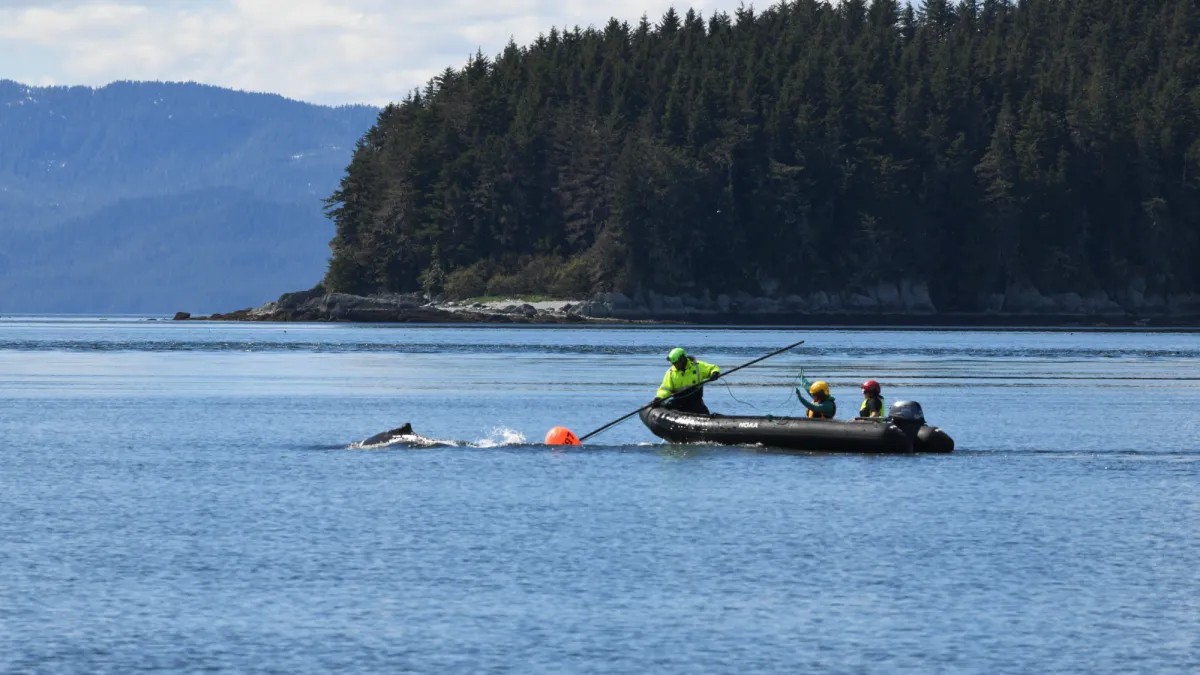
The next day a response team rolled out. Biologists from NOAA Fisheries and the Alaska Department of Fish and Game joined local partners from Alaska Sea to Shore. They spent five hours cutting.
Four precise cuts. That’s all it took to free the animal from the heavy pots and most of the gear.
“Cutting gear off an animalof this sizecan be dangerous,” said John Moran. A NOAA research fisheriologist. He uses long poles with specialized knives. Extending the reach matters when you are next to a forty-ton animal. You want to avoid becoming part of the ecosystem yourself.
Hope is that the rest of the lines fall off eventually.
But here’s the thing about Alaska. Entanglement is a huge problem. Since 198 there have been over 140 confirmed cases of large whales getting snatched in gear. That number is almost certainly higher. Most people don’t see what happens in the deep water or during storms. Unable to swim the whales drown or starve or get hit by ships or develop life-threatening infections.
“The details provided by public enabled our response to execute safe response leading successful outcome.”
— Sadie Wright Large Whale Entanglement Responden Co-ordinator NOAA Fishere Alaska Regon
We are incredibly grateful to those who called it in. The community saved a life this time. Maybe not every time. Who knows how many didn’t get seen