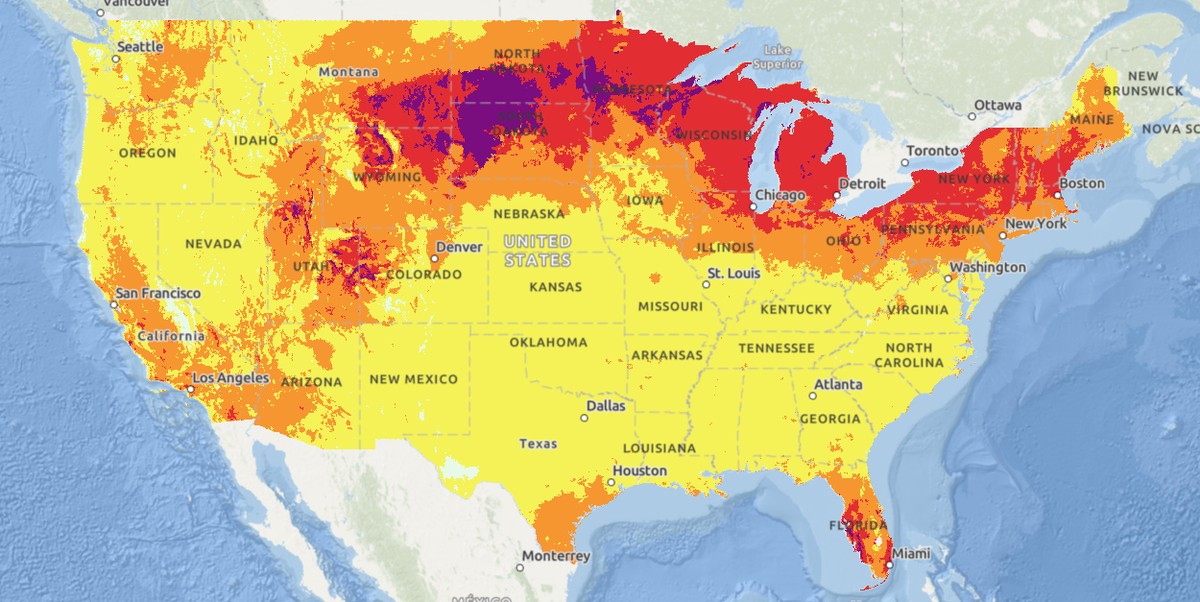
Sunday was bad. In Billings, Montana, the thermometer hit 111. A new all-time high. Salt Lake City? 109. Sheridan, Wyoming? Same. Idaho Falls clocked in at 103. The National Weather Service is already crunching the data.
Frank Pereira from the NWS isn’t mincing words. We aren’t used to these numbers in some places. Ever, really. Or maybe just very rarely.
There’s a reason for it. A “heat dome.” High pressure sits above the landscape like a lid on a boiling pot. It traps the heat. Prevents it from escaping. It piles on day after day. Even at night.
Now it’s moving east. The Midwest and Northeast should brace themselves. Richmond, D.C., Boston—expect the usual suspects to feel abnormal heat this week. Another wave incoming.
This isn’t just a U.S. problem
Look around. France broke its all-time average temperature record earlier this summer. Three separate heatwaves. They’ve killed roughly 1,300 people across Europe so far.
New York City’s Central Park didn’t hit 100 degrees since 2012 until this month. Asia and the Middle East are baking, too. The whole northern hemisphere seems to be sweating at once.
Zachary Labe with Climate Central has seen this pattern before. He calls it normal now, but in the wrong context. The phenomenon isn’t new. The intensity is. Climate change is fueling these domes. Blending them together until individual tracking becomes impossible.
More intense. Larger. More widespread. Every single summer going forward.
That’s the expectation. Research backs it up.
Human-induced climate change increases both the likelihood and the temperature of these events. Back-to-back waves in every region, every month.
Friederike Otto from World Weather Attribution puts it bluntly. Global temperatures rise, so do the odds of heatwaves. We get them more often. They hit harder. The math is simple, the reality isn’t.
Still, the specifics remain messy. Labe admits the team is still parsing the drivers for this particular summer. Climate patterns like El Niño complicate things. Why did this specific dome form here, now? We’re still figuring it out.
Surviving the spike
Don’t die of heatstroke. The World Health Organization says stay hydrated. Limit time outside. Check on elderly neighbors or those with disabilities who might be suffering in silence.
Keep kids and pets out of parked cars. The interiors cook in minutes. No exceptions.
Relief is coming to the U.S. Eventually. Later this week, a cold front might break the dome. Temperatures will dip. “Back off,” Pereira calls it. But not back to normal. Just slightly less record-breaking.
Is that enough? Maybe for tonight. But the trend line keeps going up. We adjust to the new normal by buying fans and checking the news. We hope it passes.