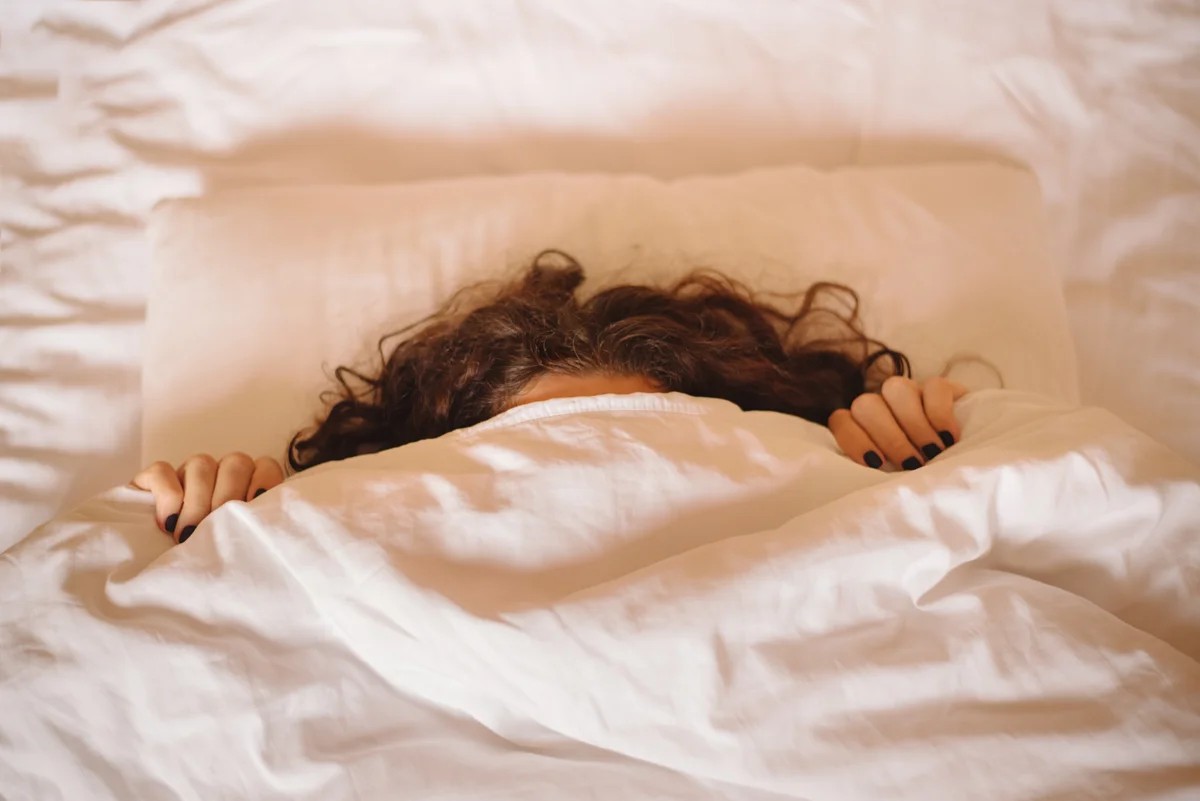
You lose an hour. The sun hides earlier. It feels unfair.
Most Americans love that one extra hour in November. It is sweet, brief, and followed by months of winter gloom. But the clock changes themselves are a trap. They break your body. They confuse your brain. They wreck your health.
Right now, the US House passed a bill to keep Daylight Saving Time (DST) permanent. If it passes the Senate, we stay “sprung forward.” No more shifts. Just perpetual late nights. And pitch-black mornings in the dead of winter.
Is this good for us?
The science says no. Not even close.
Why permanent standard time aligns with biology
Muhammad Rishi runs the critical care sleep lab at Indiana University School of Medicine. His position is clear. Permanent standard time is the winner. He wrote the 2024 position paper for the American Academy of Sleep Medicine backing it.
Why?
Because our bodies run on light. Specifically, morning light.
Think about three clocks. One is solar. That’s the sun rising and setting based on Earth’s spin. The second is biological. Your circadian rhythm. The third is social. The clock on the wall.
We function best when all three match.
DST breaks them.
It forces the social clock ahead of the sun. One hour ahead. Every day. Year-round if the bill passes. This creates social jet lag. You are waking up when your body thinks it is still dark. Your internal system gets no sunrise signal to reset.
You might think you adapt. Like jet lag, you expect it to pass in a few days. It doesn’t. Rishi says the evidence shows the body never fully adapts to this artificial shift. You are permanently misaligned with local solar time.
“Our systems work best when we are following the solar clock,” Rishi says.
That mismatch hurts. Studies link social jet lag to shorter sleep. Type 2 diabetes. Obesity. Cardiovascular disease.
The hidden health costs of winter darkness
Jamie Zeitzer, a neurobiologist at Stanford’s Center for Sleep and Circadian Sciences, puts the risk in perspective.
For one person, the risk increase is small. Almost negligible. But multiply that by 350 million people losing an hour of light synchrony every November? That is when the public health crisis starts.
Look at the 2019 study in the Journal of Health Economics. Researchers looked at people in the same time zone but different longitudes.
Everyone used the same wall clock. The solar clock changed.
People living further west within their time zone saw later sunrises. They slept less. They had more heart disease. More diabetes. Even higher rates of breast cancer. The further they were from solar noon, the sicker they got.
These aren’t temporary blips. They are the consequences of long-term exposure to circadian disruption.
Is permanent DST safer than doing nothing?
Some researchers admit the current two-switch system is the worst option. The chaos of changing clocks twice a year causes acute health spikes. From a purely biological rhythm standpoint, permanent DST might seem “less bad” than the toggle.
It isn’t.
Both systems create a gap between social time and solar time. That gap is dangerous.
Consider Rishi’s kids in Indianapolis. Under permanent DST, winter sunrise there hits after 9 A.M. School starts at 7:15.
They sit in class for two hours in darkness before the sun even appears. Their bodies have no signal that the day has started. Zeitzer notes this nuance matters. Science points one way, but human behavior adds layers.
“I would like to see more research,” Zeitzer says. “Understanding the overall health and behavioral effects.”
The House wants a fix. The Senate has to decide.
Until then, we stay confused. We chase the sun that isn’t there. We wake up in the dark, hoping our internal clocks remember what day it is.
Does it really matter if the clock says 7 AM if the window says 6 PM?
It does. Your body knows the difference. You just don’t.