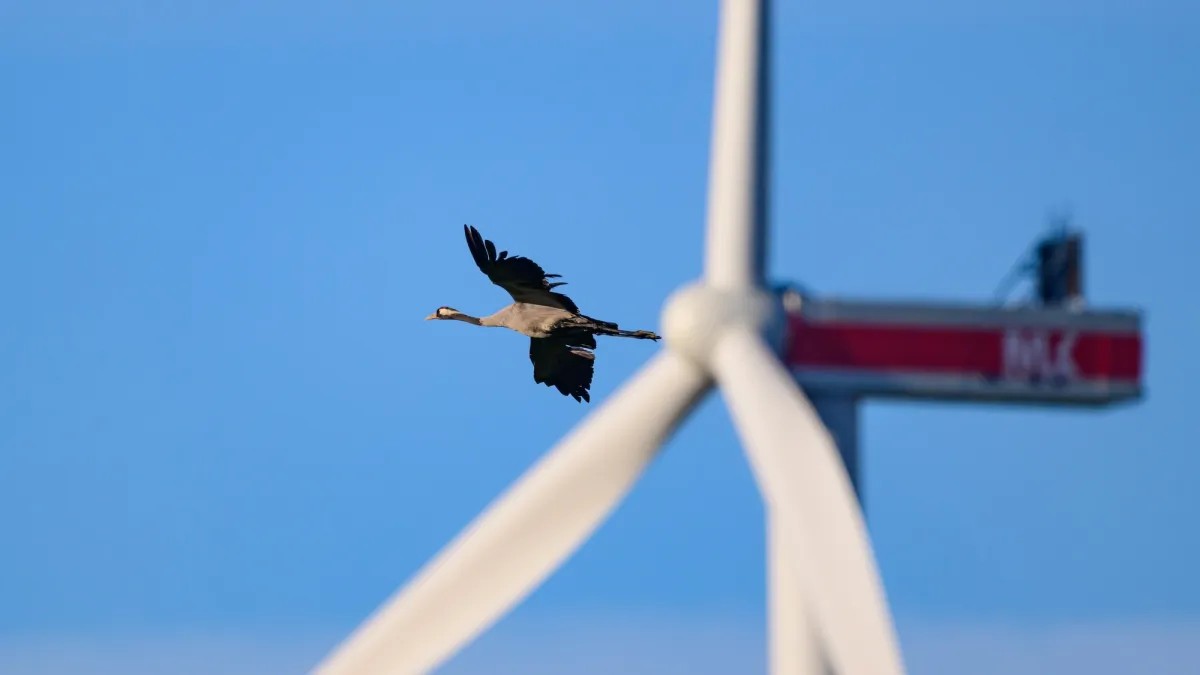
Wind energy is good for the planet. It isn’t perfect though. Those giant spinning blades kill birds. And bats too. Estimates suggest two to six birds die per megawatt every year plus a few more bats. It doesn’t sound like much until you remember that some of those birds can’t afford to die. Not even once.
So engineers are looking for solutions. One idea is ugly. Another is smart.
“White blades… turned out to be the worst option.”
A new study in Behavioral Ecology suggests we should paint turbine blades to look like things nature hates. Specifically, things that look toxic. Venomous coral snakes. Poison dart frogs.
Johanna Mappes from the University of Helsinki co-authored the paper. She’s an environmental scientist. Her point is simple: standard white blades are invisible traps to many flying creatures. A visual tweak might actually save lives.
Here is how they tested it. No dead birds involved.
They put birds in front of video screens. A touchscreen designed specifically for avian use. It feels like a game to them but it’s a serious experiment. George Hancock at the University of Exeter helps explain the logic. They simulate real-world spins without risking feathers or lives.
The results were clear.
- Classic white blades? Birds approached them freely.
- One black blade? Better.
- Red and white stripes? Even better.
- The new biomimetic mix—red, black, and yellow? Best.
The birds avoided the snake-pattern blades the most. They remembered the warning colors. It’s hardwired. We know animals react to these signals but the magnitude of this reaction surprised the researchers.
Will it fix everything? No.
Turbines will always pose some risk. But changing the color palette is cheap. It is also easy. Why not do it? Hancock and Mappes think it should become standard industry practice. They even suggest using similar tricks on power lines or office building windows where glass kills birds daily.
It might be a big deal. A small paint job could shift the whole wind industry toward being safer. Or it might not.
If the field trials work, we’ll know. If they fail, well. We still have the white blades.