The tech industry has a disease. We call things “revolutionary” or “game-changing” all the time. Usually they are not. Usually they are tiny tweaks to things that already existed, or worse, completely useless. I know this. I have seen it. I am tired of it.
And yet.
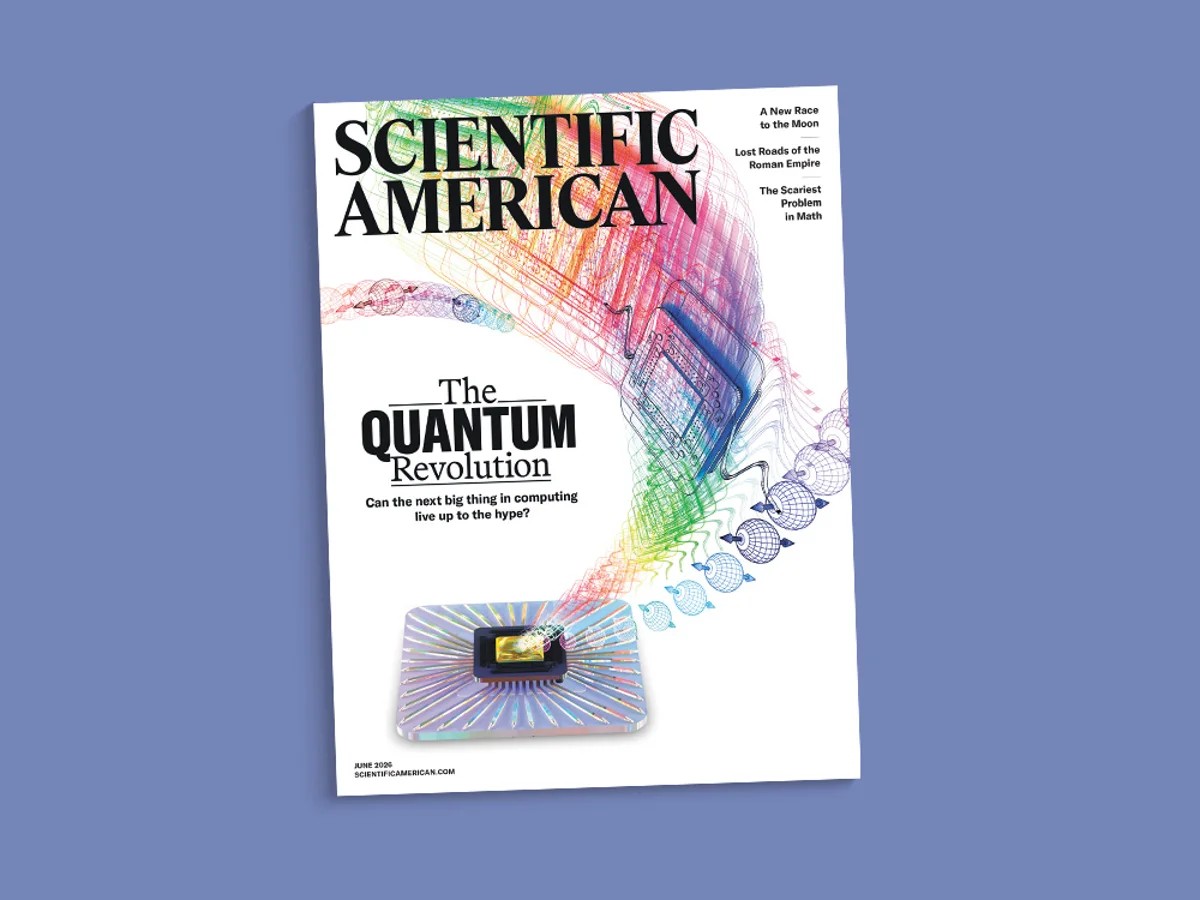
Quantum computing is different.
It actually is transformative. Monumental, even. It might shift paradigms. It might be the most important tech invention since the transistor. A quantum leap, in the literal sense of the word.
Here is why the stakes are so high.
Our entire economic system relies on public-key cryptography. These are the locks on your bank accounts, your emails, your government secrets. They are built on integers so large that brute-forcing them would require every computer on Earth to run for longer than the universe has existed. Unbreakable, we told ourselves.
A quantum computer could crack those integers. It could steal your mortgage payment in hours. Not years. Hours.
Of course there is a catch. It is a massive, gaping catch. We do not know if we can build this machine. We really don’t. We have made advances, sure, but we lack the blueprint for a functionally useful quantum computer. It might even be impossible.
So why the hype? Why the billions of dollars poured into the freezer?
This issue digs into that tension.
Inside the frozen heart of qubits
Adam Becker, who writes about science for a living and looks at stars for another, takes us into the labs where quantum computers live. They are cold. Colder than anywhere naturally occurs on Earth. Inside these cryogenic boxes, physicists are chasing a ghost. Will this tech transform medicine? Break our encryption codes? Or are we all betting the farm on a science fiction fantasy that never materializes?
It is an uncomfortable place to be. You need the tech, but you cannot build it yet.
The problem no one wants to solve
Elsewhere in this issue, Joseph Howlett looks at something even harder than quantum physics. Math.
Specifically, the Riemann Hypothesis. It has been sitting there, unproven, for 167 years. It is called “The Scariest Problem in Mathematics.” There is a million-dollar prize attached to solving it. Yet, top mathematicians avoid it. They literally refuse to touch it. Why? Howlett finds the answer, which is less about the difficulty of the math and more about the terror of failure.
Sometimes the prize isn’t worth the fall.
Back to the moon (and into the fire)
We also looked out. Way out.
In April, Artemis II sent humans farther from Earth than anyone has been before. Eleven days away from home. Nadia Drake details what this mission means. It is not just a trip; it is the start of a new lunar era. But here is the weird part: Joe Howlett points out that going to the moon changes astronomy forever.
And then there is the power.
NASA wants to build a nuclear fission reactor on the Moon’s surface within five years. Five years. Robin George Andrews, who knows volcanoes and writes well, breaks down why this isn’t as insane as it sounds. It is cold up there. Dark. You need power. Nuclear makes sense, even if it sounds like a Cold War movie.
Mapping the Empire that died
After all this futurism, we went backward.
Archaeologist Tom Brughmans has built a map. Not a paper one. A digital high-resolution reconstruction of the Roman Empire’s road network. By mixing old records with satellite imagery, his team found that the roads might stretch 300,00 kilometers.
That is longer than all the roads in the European Union today.
Troops, grain, ideas, disease—it all moved along those lines. Brughmans shows us how technology changes the past just as much as it changes the future.
So, yes. I was right initially.
We throw words like “disruptive” around too carelessly. Most of it is noise. Most of it is hype. But science has a way of catching up to its own PR. A qubit might break our banks. A moon rocket might start an industrial revolution in space. A map might change history.
Hyperbole is usually empty air.
Sometimes it is a prophecy.
What happens next depends on whether we can actually build the thing we promised to build.