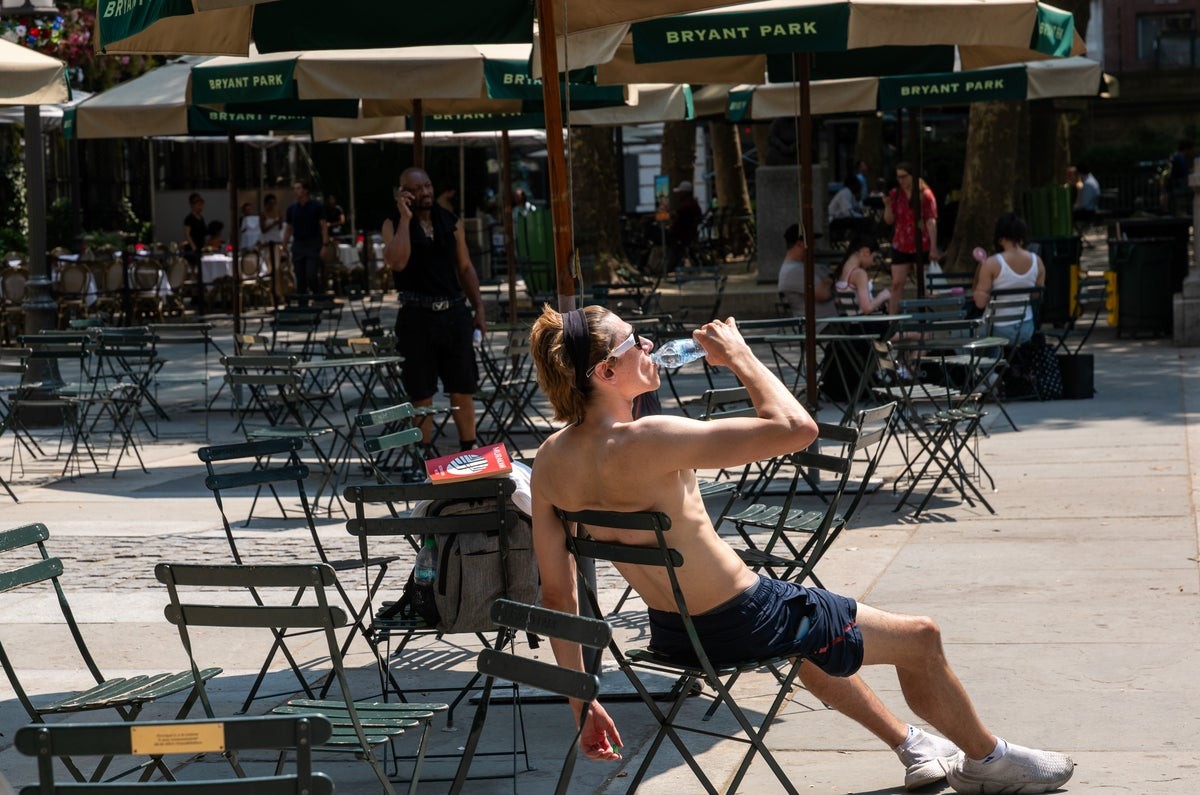
July 4th. A nice holiday. Not when it is 100 degrees.
The US turns 250 this weekend, and the temperature has decided to ruin the party. An intense heatwave is hammering the East and Central US, pushing mercury well above seasonal averages. New York City? It could feel like 115° F. That is oven-hot.
Most advice says “stay inside.” Good luck if you can’t. Air conditioning and cold water are the baseline for safety. Shower often. Wet your towel. Drink. But there is a catch. One most people don’t see coming.
The Salt Trap
Public health warnings usually focus on two things. Heat exhaustion. Heat stroke. Heat stroke is the scary one. If your internal temp hits 104° F (40° C) or you dehydrate badly, organs start to fail. Cells literally cook. You lose consciousness. Maybe worse. It requires immediate hospital care.
But there is a third beast. Hyponatremia.
Have you heard of it? Probably not. It means low sodium in your blood. It happens when you drink too much water.
Your body needs salt for cells to function. Without it, salt levels plunge. Cells swell up. Hyponatremia mimics early heat exhaustion. So you do the logical thing. You drink more water to cool down.
That makes it worse.
The swelling gets worse. Faster. Eventually, your brain swells. It can push against your skull. Seizures. Coma. Death. It can kill you in hours by forcing the brainstem into the spinal cord. Terrifying? Yes. Commonly warned against? No.
Spotting the Difference
You need to know what you are dealing with.
Heat exhaustion comes first. You overheat. You lose salt and water through sweat. Signs are dizzy spells, profuse sweating, a fast pulse. You feel sick. This is your body yelling at you.
Heat stroke is what happens if you ignore the yelling. You stop sweating. This is the opposite of what you expect. You feel confused. Agitated. You can’t speak right. Your heart races. Without treatment, it leads to organ failure. Often heart attacks.
Hyponatremia looks different. Early on? Muscle cramps. Nausea. Headaches. Fatigue. If you just keep chugging water thinking you are thirsty, these symptoms turn dark. Hallucinations. Confusion. Then the seizures start.
Water Isn’t Always the Answer
The CDC says drink eight ounces of water every 15 minutes if you are working outdoors. That adds up fast. Over an eight-hour day? Nearly two gallons. More than 6 liters.
That advice is flawed for intense labor. Some physiologists say it pushes people toward overhydration. Thirst is a poor gauge anyway, but dumping that much liquid without electrolytes is risky. The CDC actually warns that drinking more than 40 ounces of liquid in an hour can crash your salt levels. Remember: “Liquid” includes soda. Juice. Tea. Water.
Want to actually stay hydrated? Eat. Regular food replaces the salt you lose.
Wondering if Gatorade saves you? Don’t be silly. Standard sports drinks have less than 20% of the salt adults need daily. It is mostly sugar water. It won’t fix your sodium drop. Eat a salted pretzel. Better yet, if you suspect severe hyponatremia in someone, doctors sometimes use broth made from beef bouillon cubes. Salt soup. Sounds odd. Works.
Beat the Heat, Don’t Fight It
Stay inside. Close the blinds. Light means heat. If you lack AC, check if your city offers cooling stations. The National Center for Healthy housing lists them by state.
Have fans? Use them wisely.
If outside air is cooler than inside, open the window. Point the fan inward. Sit in the stream. Wear wet clothes if you dare. The evaporation does the heavy lifting.
At night, when temps drop, flip the strategy. Point the fan out the window. It pushes the hot air trapped inside out of the room. Cooler air fills the space from behind. Simple physics. Works wonders.
Must go out?
Wear a hat. Loose clothes. Sunscreen. Reapply. Find shade. Carry a handheld fan. Wet a face towel. Place ice packs on your neck or wrists. Avoid alcohol. Avoid caffeine. Both mess with your body’s temperature regulation.
Desperate move? Ice water bath for your feet. It pulls core heat out fast. Also, try putting your pillowcase in the freezer. It seems trivial. But when the air is thick and hot, every degree matters.
We treat water as a panacea. Sometimes it is a poison. This weekend, think about salt as much as hydration. Watch for the signs. Keep your wits. The heat is real, but the panic is optional.