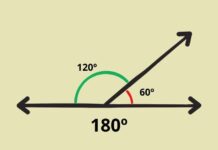
For two thousand years, geometry meant one thing: Euclid’s rules. Straight lines, parallel lines that never meet, and angles that add up to exactly 180 degrees. It felt like common sense. Then, in the 19th century, mathematicians broke it. They didn’t fix the math. They rewrote the foundation.
Why the parallel postulate matters
Euclid’s fifth postulate is the one people argue about. It says that if you have a straight line and a point not on that line, there is exactly one line through that point that will never intersect the original line. Parallel means parallel. No exceptions.
For centuries, that felt obvious. But mathematicians wondered: what if we reject that rule?
This wasn’t a trick question. It was a structural shift.
How hyperbolic and elliptic geometry work
When researchers dropped the parallel postulate, two new systems emerged.
- Hyperbolic geometry allows multiple parallel lines through a point. Imagine a saddle shape. Lines curve away from each other. Triangles have angles that add up to less than 180 degrees.
- Elliptic geometry allows zero parallel lines. Think of the surface of a sphere. Lines eventually cross. Triangles have angles that add up to more than 180 degrees.
Neither system is “wrong.” They are consistent. They just start from different axioms.
This forced a major change in how mathematicians thought. The goal was no longer to discover one correct geometry. It was to create systems by choosing axioms and exploring what theorems followed from them.
Where this leads: from math to physics
The impact went far beyond pure mathematics. Non-Euclidean geometry reshaped the concept of space itself. Before this, space was treated as a fixed, flat background. Afterward, space could curve. It could have properties. It could affect motion.
This paved the way for Einstein’s theory of relativity. Gravity is not a force pulling objects across flat space. It is the curvature of space-time itself. Without non-Euclidean geometry, that idea would have been nearly impossible to formulate.
The shift from discovering geometry to constructing it changed mathematics from a descriptive field into a creative one.
Who built these frameworks
Two names stand out in this history.
- Nikolay Lobachevsky developed hyperbolic geometry in Russia.
- Bernhard Riemann generalized the ideas in a way that became essential for modern physics and higher-dimensional spaces.
They worked independently, but their combined work proved that Euclidean space was just one option among many.
Why this matters for learners today
If you are studying geometry, calculus, or physics, non-Euclidean geometry is not just a historical footnote. It is a lens. It shows that assumptions matter. Change an axiom, and the entire system changes.
It also teaches something practical: consistency is more important than intuition. A geometric system doesn’t have to match everyday experience to be valid. It has to hold together logically.
That idea extends beyond math. In science, in data modeling, in even design, the question is not “what feels right?” It is “what follows consistently from these starting points?”
The next time you draw a triangle