They found a new monkey. Again. Sort of.
This one hides in the dense greens of the Democratic Republic of the Congo. Specifically, the Lomami National Park. It looks familiar enough until you look closer. Way closer.
Then you see the lips. Bright orange. A distinct patch framing the mouth that makes the rest of us feel drably normal. Then you hear it. A deep, croaky noise. Not a chirp. Not a screech.
It sounds like a pig snorting. Or maybe a frog that ate gravel.
Scientists finally gave this primate a name on Wednesday. Colobus congoensis. The locals already had one for it, too: Likweli. The big surprise here isn’t just that it’s a new species—only the fifth African monkey identified in seventy-five years—but that we already knew it was there. Locals had seen them forever. We just never bothered to write it down formally. Until now.
Two Decades in the Bush
It takes patience to lose an animal this big in a forest. This hunt started way back in 2008.
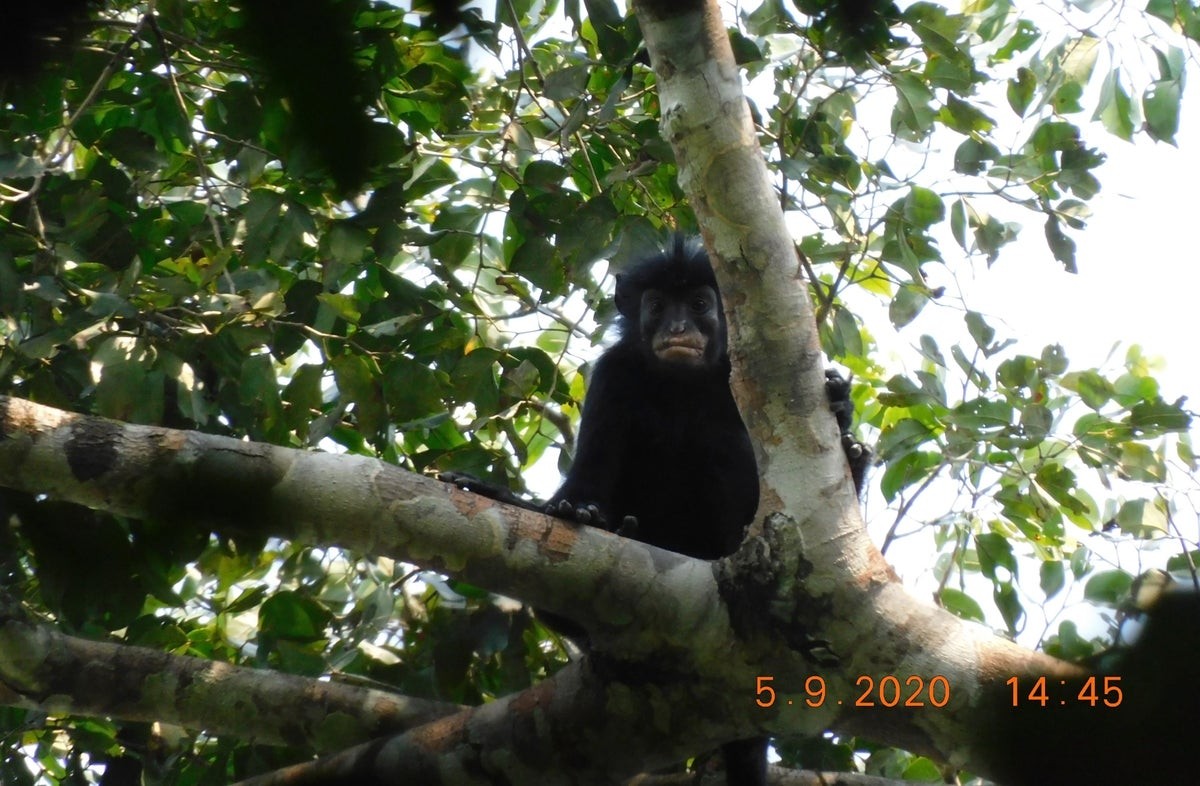
Junior Amboko was on the research crew then. They captured a photo. The image was blurry, grainy, the sort of shot you usually delete. But Amboko kept it.
Why?
Because something felt wrong. Or rather, strange. The face looked odd. But blurry photos don’t win scientific debates. Not without more evidence.
Years passed. Then more pictures emerged. These ones showed something missing: a thumb. No thumb is a dead giveaway. That’s how you spot a Colobus monkey. The lack of a grasping finger is a trade-off for efficient swinging, but it also raises the stakes.
Is it a new species? Or just a weird cousin of the black colobus? Amboko couldn’t be sure. Subspecies or species is a line that often gets drawn with politics, not just biology.
In 2020, things shifted. The “Likweli Project” kicked off. This wasn’t just about taking more selfies. They needed hard data.
The team gathered more photos. They recorded the calls—capturing that disturbing pig-frog symphony. They even analyzed tissue samples from dead monkeys seized during illegal hunts. It’s grim work, necessary but unglamorous.
That DNA did the talking.
A Genetic Shock
Kate Detwiler, an associate professor at Florida Atlantic University and senior author of the study, admits the results hit them hard.
The genetic divergence was deep. Not just a little branch on the tree. A whole new trunk.
“We were shocked with the genetic data,” Detwiler said. It was a signal that screamed separation from the black colobus, its so-called “sister” species.
Amboko named it Colobus congoensis. A nod to the country’s chaotic, incredible biodiversity. He’s a PhD student there, but he knew what the monkey needed. A name. A place. Recognition.
The creature is small. Adults tip the scales at around fifteen pounds, give or take. They’ve got that orange mouth-ring. Plus a tuft of fine white hair right on their butts. A final flourish. A badge of identity.
The genetic signal provided was clear. It wasn’t a variant. It was something else entirely.
Already Endangered
Here’s the part that hurts.
By the time we knew their name, the threat was already moving in on them. C. congoensis doesn’t stand a chance without intervention. Human population growth eats into their forest. Hunters want them. They are under pressure from the start.
The researchers didn’t waste time. The new paper in PLOS One immediately recommends the IUCN list these monkeys as Endangered. It’s a stark label. One that usually arrives with a side of panic.
They have orange lips. They have frog calls. And they might not make it to old age if the forest goes away.
So we named them. We wrote a paper.
Now the hard part begins.