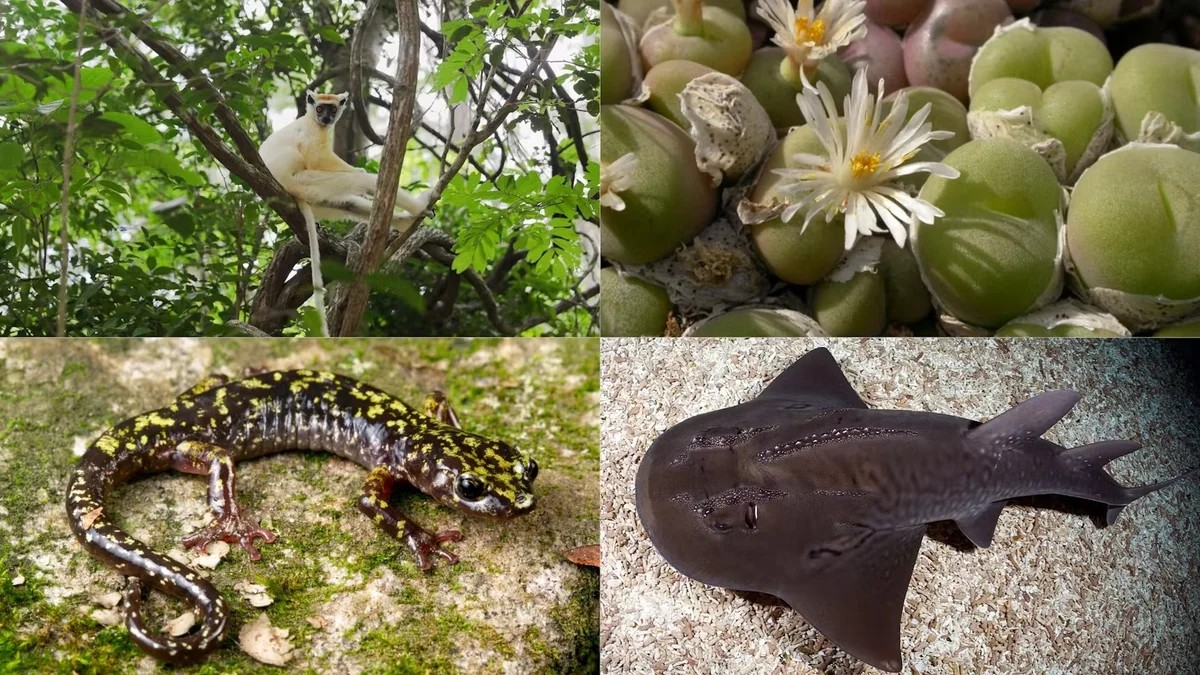
It starts with a simple question. What do you tell a seven-year-old when their favorite wild creature is gone forever?
Lauren Sánchez Bezos puts it bluntly. Kids fall in love with animals. They don’t care about statistics or policy papers. They just see something beautiful. Then one day, it’s not there anymore. That’s the emotional hook behind the Phoenix Species Project, a new, high-stakes conservation initiative designed to pull 100 of the planet’s most desperate species back from the edge of extinction.
The project launched this Tuesday. It’s a joint effort. Leonardo DiCaprio’s Re:wild and Jeff Bezos’s Earth Fund are pooling resources. Each organization is handing over $100 million. That’s $200 million total. The goal is specific: recover 100 critically endangered species globally.
This isn’t just handing out checks. The money will fund concrete, messy, difficult work on the ground. Breeding programs. Moving animals to safer habitats. Managing diseases. Waging war on invasive species that choke out native life. They are bringing in over 100 partners. Local conservationists. Indigenous groups. Governments. Everyone who actually knows the terrain.
Why Now? Political Backlash and Rising Stakes
Timing matters here. The announcement came just weeks after the Trump administration rolled back key parts of the Endangered Species Act (ESA). The new rules change how “critical habitat” is designated. Now, potential economic costs and national security concerns can outweigh the needs of the species. If the administration decides a species won’t go extinct locally, that area loses its protected status. It’s a significant loosening of protections.
Meanwhile, the data doesn’t lie. The International Union for Conservation of Nature (IUCN) lists over 4,000 animals as “critically endangered.” That’s nearly a fivefold increase since 2006. Another 7,254 are “endangered,” and 7,232 are “vulnerable.” In the U.S. alone, the Fish & Wildlife Service tracks 1,515 threatened or endangered species.
The gap between political will and biological reality is widening. The Phoenix Species Project aims to bridge it.
“This project is our answer,” says Sánchez Bezos, referring to the void left when a wild species vanishes from a child’s world.
The 100 Species on the Line
Which animals made the cut? The list is diverse. Reptiles. Birds. Mammals. Fish. Sharks. Rays. Amphibians. Invertebrates. Even plants. Yes, an African dwarf succulent known as the “fuzzy belly button” is included. You probably haven’t heard of it. Neither has most adults.
These 100 species are scattered across 30 countries on five continents. Some are already extinct in the wild. The Hawaiian Crow (ʻAlalā). The Guam Kingfisher. The Charco Azul pupfish. These animals survive only in captivity or lab settings. The project aims to return them to natural ecosystems, a task that requires decades of effort, not just dollars.
The funding will support targeted strategies for each. A breeding program for one species might look nothing like the disease management plan for another. The money isn’t a flat grant. It’s tailored intervention.
How Much Does It Cost to Save a Species?
You can’t put a price on biodiversity in the abstract. But the Phoenix Species Project gives you a concrete number. $2 million per species. Average.
Is that enough?
Consider the cost of failure. Once a species is extinct, no amount of money brings it back. The $100 million contribution from Bezos and DiCaprio is seed capital. It leverages the expertise of Re:wild and Bezos Earth Fund, which have decades of experience in large-scale restoration. They’ve worked in the Amazon. In Africa. In Asia. This new venture applies those lessons to the most critical cases.
The partnership also signals a shift. Conservation is often seen as charity. Here, it’s treated as urgent infrastructure. If you lose the species, you lose the ecosystem. If you lose the ecosystem, you lose the services that keep us alive. Clean water. Air. Soil health.
The political headwinds in the U.S. are strong. Rollbacks of the ESA could slow domestic efforts. But the Phoenix Species Project operates globally. It doesn’t wait for Washington. It goes to the places where the species still hang on by a thread.
What’s Next for the 100?
The work begins now. Partners are being vetted. Sites are being identified. The first $100 million from each funder will kick off initial grants. Over time, the project will scale. More species might get added. Or the list could shift based on what works.
It’s a gamble. Not all breeding programs succeed. Translocation fails. Diseases mutate. Invasive species are relentless. But the alternative is doing nothing. And doing nothing has already failed, judging by the 500% rise in critically endangered animals since 2006.
There is no neat wrap-up here. The animals are still dying. The political landscape is still shifting. The money is a buffer, not a cure-all.
But for the first time in recent history, two of the world’s wealthiest and most influential figures have aligned their resources on a specific, measurable, and massive biological rescue mission. They aren’t planting trees. They’re fighting to keep animals alive.
Ask yourself what’s missing from the world around you. Then check the list. The fuzzy belly button isn’t the only strange