It was July 2017 when marine biologist Kathryn Ayres decided to dive into the Gulf of California. She was shark diving. The water was warm, the visibility good. Then she saw them.
A pod of orcas.
Ayres didn’t panic. She felt lucky. Rare sightings happen, but this felt different. Her boat crew followed the whales. They kept a respectful distance. Then, she jumped into the water to get closer.
What happened next defies logic. Or at least, it defied her expectations.
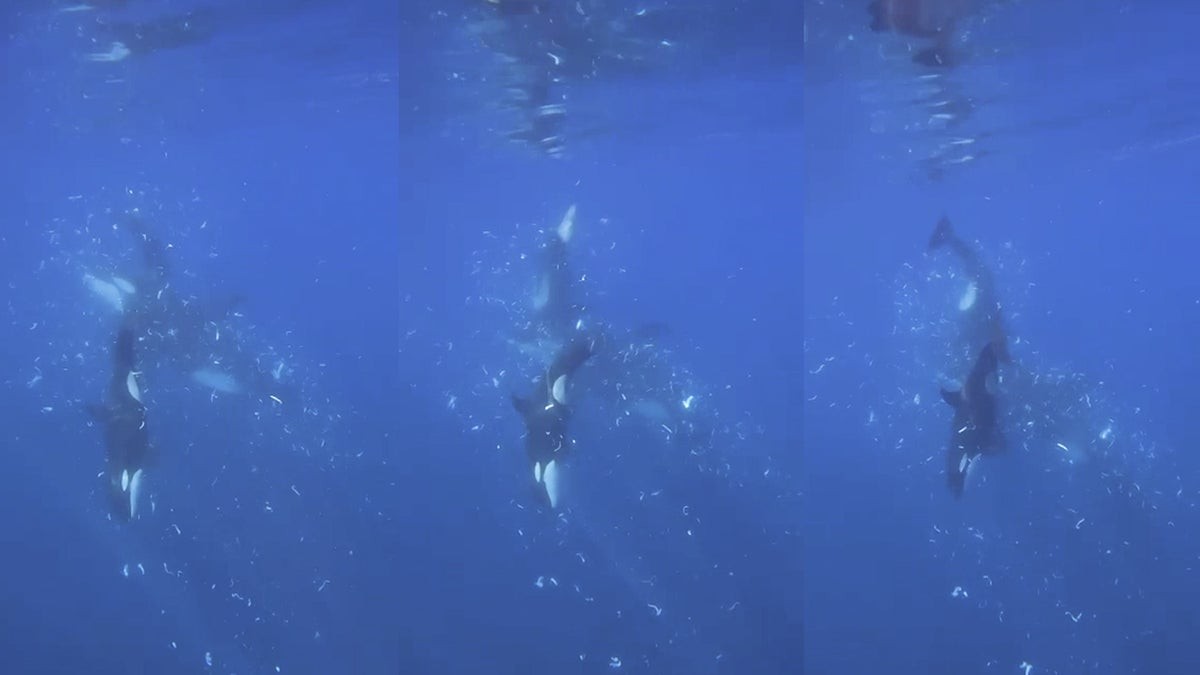
Below the surface, an adult female orca held a dead sharptail sunfish. You might think sunfish are just big, blobby fish. They’re not. They’re some of the largest bony fish in the ocean. This one had already been gutted. Hollowed out. But the whale wasn’t done.
Suddenly, a male orca broke the surface. Belly up. He crashed down with his head.
Boom.
The carcass didn’t just break. It exploded. A plume of guts and scales shot into the water. Ayres was screaming. “Oh, my god, oh, my god… Holy shit. What the heck?”
She couldn’t help herself.
Why Do Orcas Ram Sunfish?
In July 2024, a paper published in Frontiers in Ethology finally gave this moment a name. Erick Higuera, a cinematographer with Orcas México, calls it “high-impact ramming.” It’s not entirely new. Marine biologists suspected it existed. But no one had documented it. Until now.
Higuera and Ayres shared the footage. They also included a second incident. This one happened a little over a year after the explosion. Three females and a calf rammed a sunfish. The result? Similar devastation.
So, why do they do it? Is it for fun? Is it survival?
The researchers have theories. First, it makes the prey easier to eat. In Ayres’ video, you can see a juvenile orca gobbling up the exploded bits floating in the water. Second, sunfish have a gelatinous layer beneath their skin. Higuera notes this could be a source of water or nutrients in the open ocean.
“It proves that their hunting strategies are not rigid.”
More Than Just Killing
We tend to think of predators as efficient machines. Kill. Eat. Repeat. Orcas seem to disagree.
Higuera points out that orcas are known to play with their food. They pass dying prey around. Like a macabre game of hot potato among siblings. This behavior helps teach younger generations how to hunt. The sunfish explosion? It’s a unique lesson.
It shows flexibility.
These whales adapt. They change their tactics based on the prey. Remember the waves they create to flush penguins off ice blocks? Or the way they herd rays? Or extracting the livers of white sharks? This ramming behavior is just one tool in a massive arsenal.
It’s bad news for the sunfish. They don’t stand a chance.
For biologists, though, it’s a win.
Conservation and Culture
Understanding these behaviors isn’t just trivia. It helps define distinct orca cultures and ecotypes. It changes how we manage local conservation efforts. If we don’t know why they act this way, we might misunderstand their needs.
Higuera’s quote in the paper is straightforward: understanding these actions is crucial for protecting these animals. Not because they’re cute. But because they’re complex.
The footage is startling. Violent, even. But it’s also a glimpse into a mind that works differently than ours.
Did the males smash the fish for fun? Maybe. Did they do it to extract water? Likely. Did they do it to teach the calves how to handle unusual prey? Almost certainly.
We’re still learning. The Gulf of California holds more secrets. And the orcas? They’re keeping the best ones.