He died over a thousand years ago.
Yet the math world just gained a prodigy. Not because he showed up on the scene today but because his signature survived the collapse of empire, jungle growth, and time.
The Maya did math, we knew. Their calendars tracked celestial cycles with precision that demands advanced calculation. But we didn’t know the names. Most Indigenous knowledge got wiped or discarded during European conquest, leaving behind structures and stone while names vanished into the void, unlike Greek, Mesopotamian or Chinese mathematicians whose identities remain intact.
Until today.
Archaeologists published a new study in Antiquity, decoding a fragment of plaster dating back at least 1100 years. The symbols represent a mathematical formula tying together the orbital periods of celestial bodies. Beside it are hieroglyphs. They read “so says Sak Tahn Waax.” His name translates to White-Chested Fox. He is a male Maya astronomer. The first from Mesoamerica identified by name.
“It was his mic-drop moment,” says Heather Hurst. She’s an archaeologist at Skidmore and senior author. She sees the inscription as bold, a way to declare I did this crazy math and walk away. Sak Tahn Waax stamped his work with his identity.
The trace starts in 2010 at Xultun in Guatemala. A bustling ancient city now swallowed by trees. A team dug around a looter hole and uncovered a mural. A large chamber appeared with painted walls.
One wall looked dirty. Or damaged. Upon closer look it held thin plaster scraps covered in markings. The team couldn’t read them right then but couldn’t stop looking. For more than a decade they revisited the fragments during quiet moments, chipping away at meaning.
“It seemed like random numbers and dates,” Hurst remembers. Then her colleague Franco Rossi cracked it. Working at MIT, Rossi read the symbols as celestial chronology. They mapped out how long planets take to return to specific positions relative to the sun—Mars and Venus in particular. The formula related every cycle to each other, mixing in the 260-day Maya ritual calendar. The scribe used neat mathematical coincidences. Least common multiples. All bound in one statement. Then signed it.
Oswaldo Chinchilla wasn’t part of the research, an anthropologist from Yale. He calls the text unique, noting rhetorical symmetry and beautiful structure. It isn’t just numbers, it is observation, cultural meaning and identity woven together. Knowing who wrote it changes everything, he argues. This wasn’t an anonymous exercise but knowledge tied to a real person worth naming.
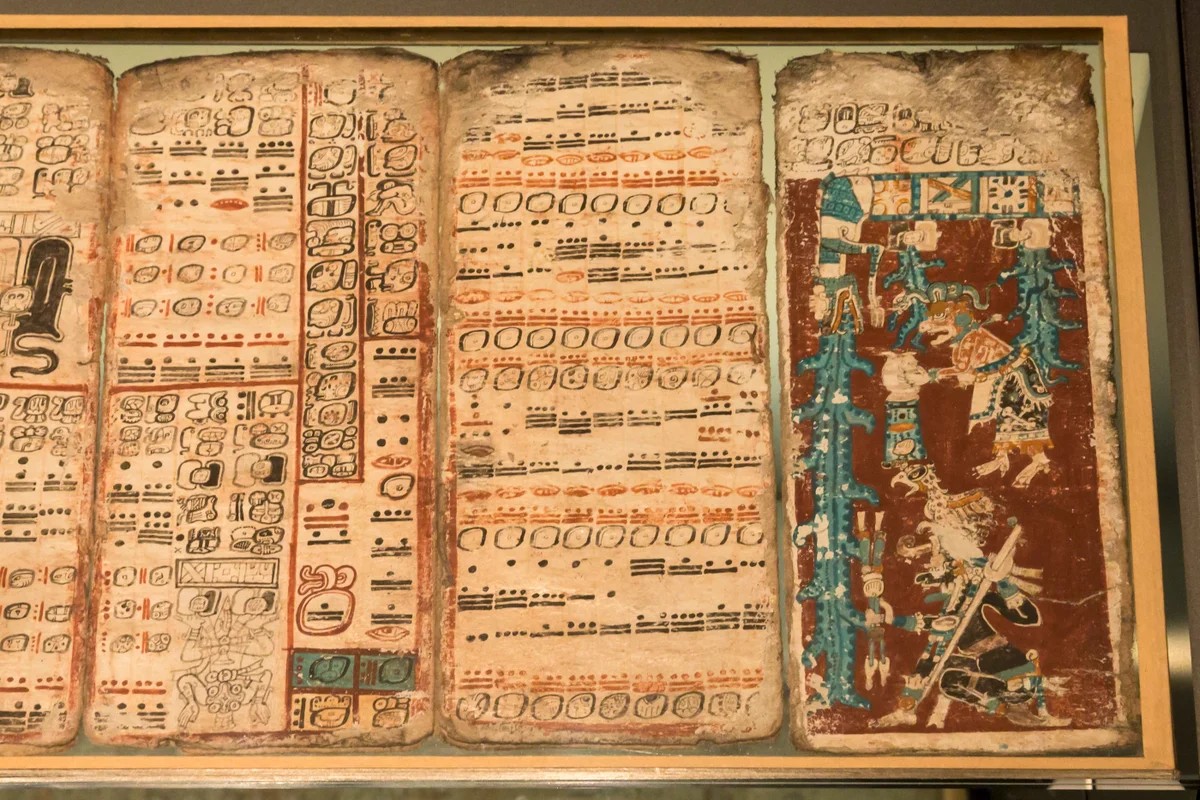
Gabrielle Vail, a UNC Chapel Hill archaeologist who also didn’t participate, connects it to the Dresden Codex, an old intact Maya text heavy with mathematics. She thinks Sak Tahn Waax’s work might be the original source, ideas preserved before they made it to codex pages.
But the story isn’t done. The room at Xultun was probably an artisan guild residence for scribes or paper makers. Did Sak Tahn Waax live there, or was someone just quoting a famous equation? Who knows yet.
Hurst plans to look at more plaster fragments. They have different handwriting. Other scribes were present. The city still has secrets under its soil.
“Someday we might learn more,” Vail says, still impressed by what’s there. She admits it gives her chills thinking about a single ancient mind calculating planetary cycles and wanting credit for it. The math works. The name stays.