Silicon Valley has cooked up a scheme that makes my skin crawl. A biotech start-up wants to breed human clones without brains. Specifically. They want meat sacks. Bodies for transplant. Spare parts for the immortality crowd.
The ethical hack is simple. If the clone has no consciousness, no self, no awareness. Then using them isn’t murder. It’s just harvesting.
The assumption rests on a specific map of the mind. The cerebral cortex. That wrinkly, high-tech outer layer. We assume that’s where “you” live. Where language, abstraction, and the ego hang out. Most scientists agree. No cortex? No inner life. Just a philosophical zombie walking around, empty inside.
But what if they’re wrong?
The Old Model vs. The New
Mark Solms, a neuropsychology professor in Cape Town, thinks we have the map backward. He calls it the “corticocentric” model. We treat the brain like the universe used to be treated with Earth at the center. Everything revolves around the cortex.
Solms and others want a Copernican revolution in neuroscience. They argue consciousness originates much deeper. In the subcortex.
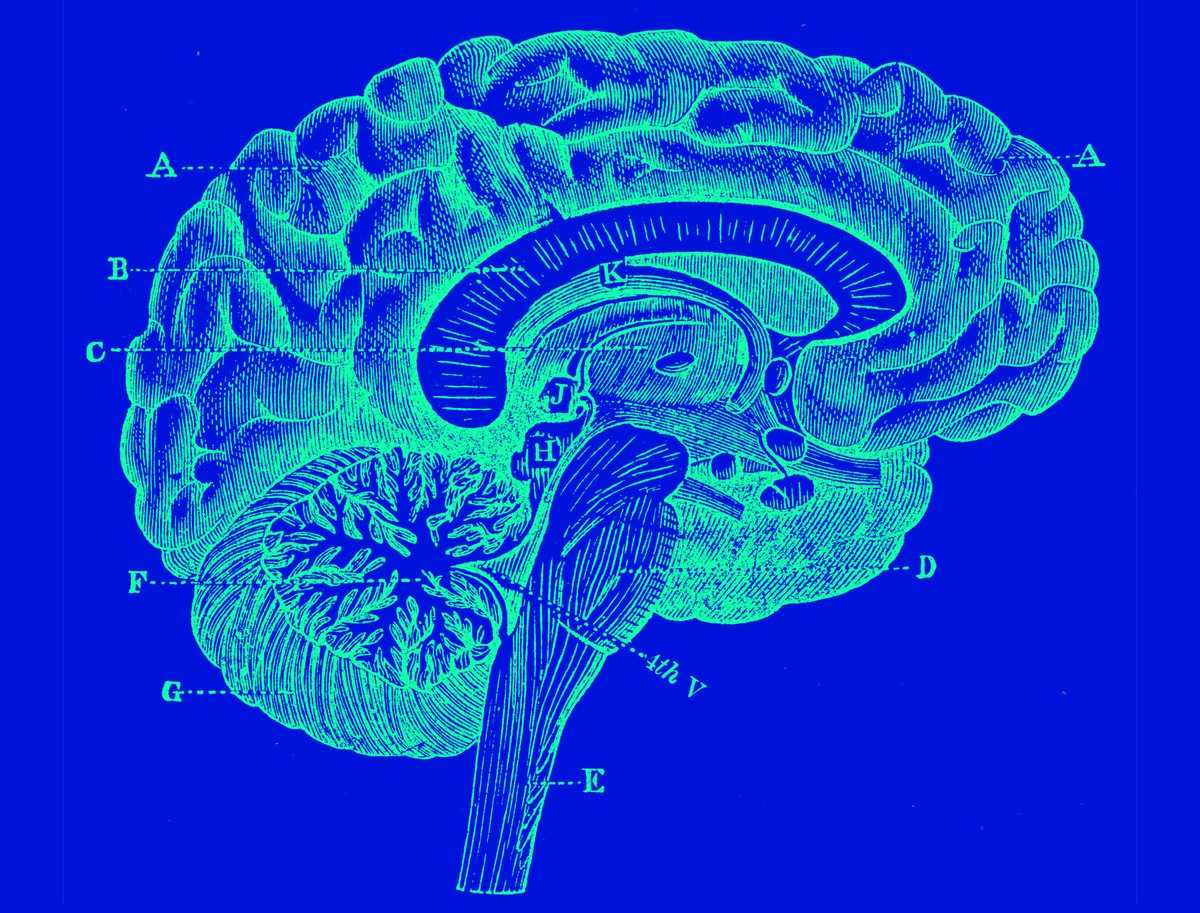
This isn’t some new, shiny structure. The cortex is the upstart. The rich kid. In humans. It makes up about 75% of the brain’s mass. It envelopes everything else. It does the fancy thinking.
The subcortex? The basement. Ancient. Evolutionary gristle. It handles the basics. Arousal. Emotion. Keeping your heart beating. Sensing the world before the cortex even knows what hit it.
We know they talk. Signals flow up from the deep brain to the cortex. Feedback ripples down. In a healthy brain, they’re best friends. If you damage the brain stem in that lower region. The lights go out. Solms calls it that. But does the basement hold the generator. Or just the fuel line?
Real Zombies Don’t Exist
We don’t need lab-grown clones to test this theory. We already have cases. Children born with hydranencephaly. They have almost no cerebral cortex. Their skull cavities are filled with fluid instead.
Medicine usually labels them as in a persistent vegetative state. Unconscious. Vegetative.
Then there was Bjorn Merker. A Swedish neuroscientist who did the unthinkable. He brought five of these kids to Disney World.
He watched them. For a week. They weren’t staring blankly at walls. They laughed. They played with toys. They reacted to the noise, the lights, the other kids. They were responsive. Emotionally engaged.
Merker wrote about the experience later. He couldn’t reconcile the data with the label “zombie.” A zombie acts human but feels nothing. These kids acted normal. They looked happy. To call them unconscious felt like a lie.
Solms agrees. “The evidence that they are not ‘zombies’ is exactly the same evidence that your cat is not a zombie.”
He points out a paradox in how we treat pets. We see our dogs and cats showing emotion, fear, joy. We grant them some inner life. But when a human child lacks the cortex to articulate those feelings? We declare them void.
Why do we privilege the spoken word over behavior?
Seeing Without Knowing
It’s tricky. We can’t ask these kids, “What do you feel?” We’re left guessing. This is the classic Hard Problem of Consciousness. We see the behavior. We infer the experience. But we don’t have the receipt.
Most consciousness research relies on vision. Here’s why that might be misleading.
Information hits your eye. It bounces through the subcortex to the visual cortex in the back of your head. That initial trip? Unconscious. You can respond to it without knowing it’s there.
There’s a phenomenon called blindsight. A person has their visual cortex damaged. They swear they see nothing. Pitch black. Yet, show them an object. Ask them to point. They do it. Accurately. Their brain is processing the shape. Their body is reacting. But the subjective “experience” of sight is gone.
Matthias Michel, a philosopher at MIT, leans on this data. He thinks animals with cortices (or equivalents. Birds have pallium) are conscious. Animals without them. Fish. Insects. Probably not.
He argues consciousness is just the tip of the iceberg. Most of our behavior is automated. Subconscious. The kids with hydranencephaly might be like that. Reactive. Functional. But dark inside.
Solms hates that explanation. He finds it boring.
Feelings Are First
“What if,” Solms suggests. “We started with feeling, not vision?”
Feelings, he argues. Are the original software. Vision came later. The need to balance hunger, mating, and escaping predators. That’s ancient.
Evolution needed a way to prioritize. Do I eat now? Or hide from that predator? Emotion is the tie-breaker.
“We feel so that we can transcend instinct,” Solms says.
This makes sense across species. You don’t need a fancy neocortex to feel pain. Or fear. Or comfort. You need a subcortex. This architecture evolved 500 million years ago during the Cambrian explosion. Before mammals existed. Before reptiles even dreamed.
If the subcortex handles feeling. Then reptiles have consciousness. Fish have it. Maybe insects do too.
It expands the club significantly.
Even Michel, the staunch corticalist. Grudgingly admits the evolutionary logic has appeal. “Pretty simple animals have that,” Tim Bayne. a philosopher at Monash, notes. The need to integrate real-time data is universal.
The Deep Dive
The cortex definitely adds flavor. Richness. Abstraction. Art. Solms doesn’t dispute this. The cortex paints the masterpiece. The subcortex provides the canvas.
The question remains. Where is the paint mixed?
Subcorticalists believe the cortex sends a massive, chaotic storm of electrical noise downward. It funnels into the deep brain. A neural bottleneck. There, the noise is sorted. Condensed into a single stream. Awareness.
If this is true. The deep brain doesn’t just support consciousness. It generates it.
And we can test this now. Not with observation. With ultrasound.
A new tech called transcranial focused ultrasound (tFUS). It bypasses the skull. Hits specific targets in the deep brain.
Anil Seth at Sussex University. Usually cautious. Is interested. He’s seen the evidence for both sides. He’s stuck. But he signed a petition. A big one.
In 2024. nearly 600 scientists signed the New York Declaration on Animal Consciousness. It’s a formal statement. We can no longer dismiss the welfare of vertebrates. And probably many invertebrates. Like octopuses.
The declaration says we should consider them conscious. Or at least capable of it.
Seth signed it. Even though he leans cortical. He admits the debate has opened.
“I wouldn’t be terribly surprised… and the answer is that some basic forms… are supported by the subcortex.”
If ultrasound proves that stimulating the subcortex creates a sensation where the cortex previously couldn’t. The model breaks. Michel says he’d be blown away.
The map might need redrawing. The mind isn’t in the skyscraper. Maybe it’s in the foundations.