The numbers don’t lie. They’re rising faster than the thermometer.
Europe is burning. And it’s thirsty.
This isn’t just another bad summer. This is a one-two punch of extreme heat and crippling drought that is killing thousands, drying up rivers, and stripping the soil bare. The strain on infrastructure built after the deadly 2003 heatwave is failing. We are seeing the cracks form in real-time.
The human cost of record-breaking temperatures
Let’s talk about the death toll first. It’s not just a statistic; it’s a crisis. Between June 22 and June 28 alone, the WHO-backed European mortality monitoring network recorded over 16,000 excess deaths across 27 countries. The vast majority? Over 14,000 were people aged 65 and older. Vulnerable groups—children, the elderly, outdoor workers—are dying because the air itself has become lethal.
But here’s the problem with the official numbers. They are likely massive undercounts.
In 2022, the WHO initially estimated Europe’s heat-related death toll at 15,000. A later study in Nature Medicine, using full mortality records, put the true figure above 614,000. Wait, no, 61,000. More than four times the initial count. Why the gap? Because heat deaths are usually only logged if a certificate explicitly lists “heatstroke.” It misses the heart attacks, the strokes, the respiratory failures triggered by extreme temperatures in people with existing conditions.
Public health experts warn that this undercounting delays action. If officials don’t see the true lethality until months later, they don’t act fast enough.
“What’s most alarming is that these conditions are occurring only at 1.4°C of warming,” says Mariam Zachariah of Imperial College London. “If temperatures hit 2.8°C, these conditions could double.”
A climate that outpaces our defenses
The EU’s Copernicus Climate Change Service confirmed Western Europe’s warmest June on record. The second half of the month broke monthly and all-time highs. The World Weather Attribution (WWA) group analyzed these spikes and found they would have been “virtually impossible” without global warming. Such extreme heat is now 10 times more likely than it was in 2003.
The heat itself is hotter, too. ClimaMeter analyzed that events like June’s are up to 2.5°C warmer than decades ago. This exposed 327 million people to climate-intensified danger, touching $15.6 trillion in assets.
We’ve built adaptation measures since 2003. Cooling centers. Early warning systems. Heat action plans. But researchers argue these old tools aren’t enough for a climate that evolves faster than we can adapt.
There’s another insidious effect too. A study in Nature Climate Change found that repeated exposure to extreme heat accelerates biological aging. It makes you more susceptible to health issues. The magnitude of this damage? Comparable to smoking or drinking regularly. You are literally aging faster in the heat.
Drying soils and dying rivers
Physics doesn’t care about our preparedness plans. Hotter air holds more moisture. It pulls harder. It sucks the water out of rivers, lakes, and soils like a sponge under pressure.
The WWA’s rapid analysis shows record heat has caused evaporation levels that led to drought in Western Europe being up to 80 times more likely, and Eastern Europe 40 times more likely, than in a pre-industrial world.
The result? Desiccated vegetation. Wildfires.
- Spain burned 116,000 hectares.
- France burned 42,000 hectares.
- Even the usually damp U.K. saw fires.
This thirst extends to the lifeline of European agriculture and logistics. France is on track for itslowest maize harvest in 50 years. Romania has lost over a million hectares of maize. With existing global supply strains, these losses will push food prices up. Low-income households, already struggling with drinking-water rationing, will hit the hardest.
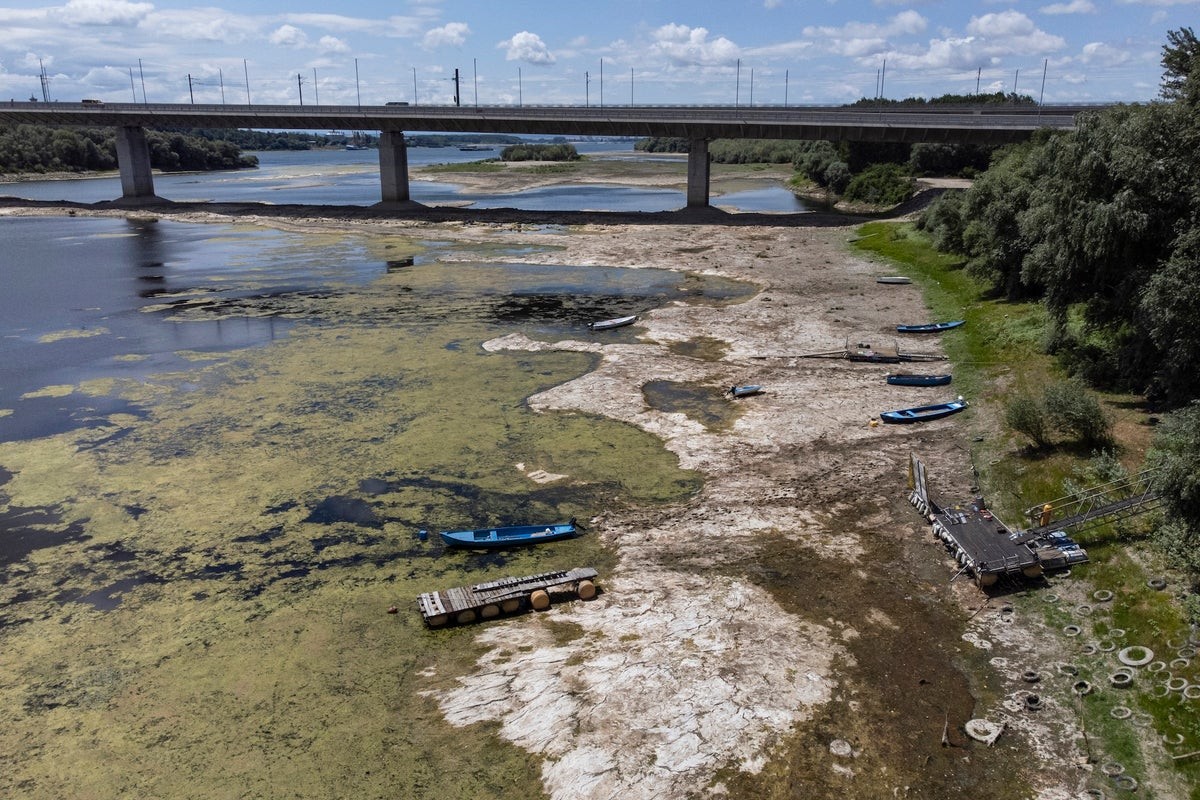
Transportation is also grinding to a halt. Low river levels are blocking cargo ships. The Rhine, one of Europe’s busiest cargo routes, saw its flow drop to a record low of 715 cubic meters persecond during the July 18–19 weekend. It broke a record set in the severe drought of 1976.
A future of dry summers
The question isn’t whether this will happen again. It’s how often.
Mariam Zachariah’s warning is stark. Without rapid, aggressive emissions cuts, we are heading toward a future where 2.8°C of warming becomes the norm. In that world, scorching, dry summers don’t just happen. They happen time and time again. Droughts like this become regular occurrences.
The adaptations from 2003 were a start. They are now obsolete.
The soils are dry. The rivers are low. The people are dying. And the data says we are only at the beginning of a much drier, hotter reality. What happens when the next heatwave hits?