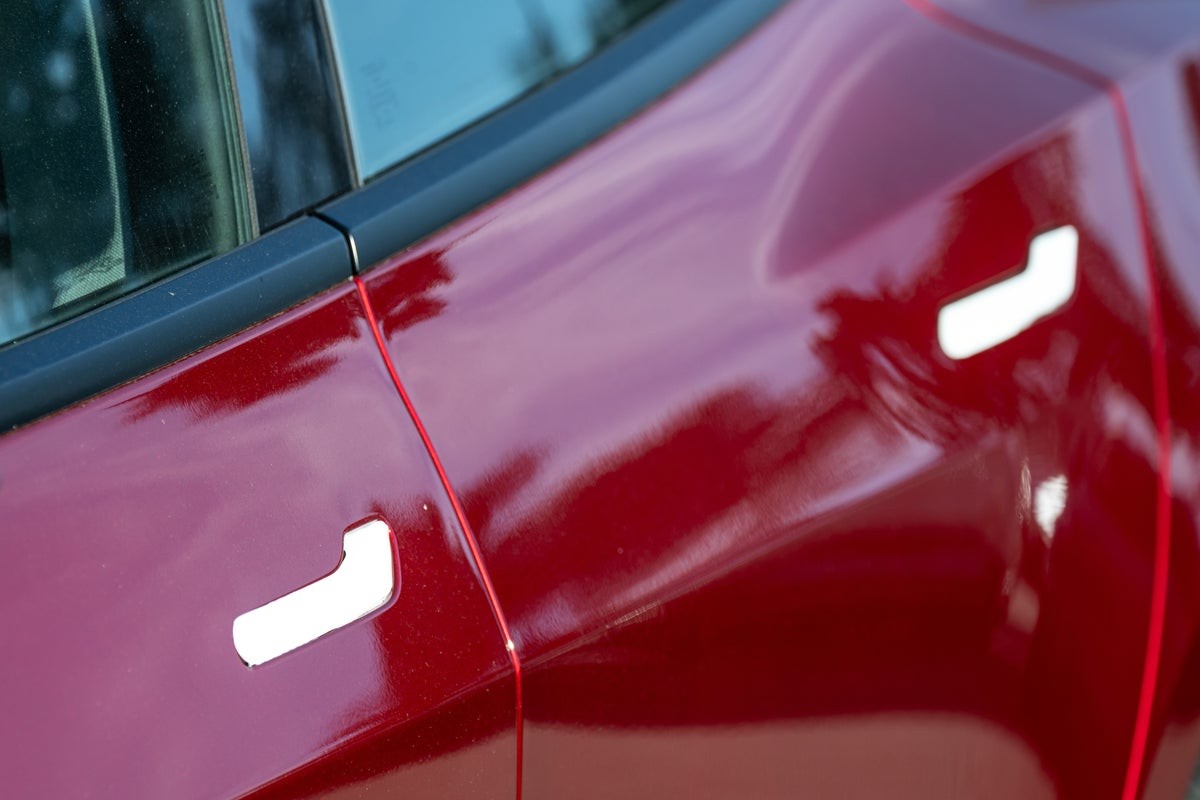
The National Highway Traffic Safety Administration is looking at a major change in how cars open. The agency is considering new safety rules after reports surfaced that people got trapped inside burning Teslas. It’s a grim reality. If your electronics fail, you need a way out.
But don’t hold your breath for quick fixes. Any actual changes could be years away.
The trigger: A denied defect petition
On July 24, NHTSA issued a denial. They rejected a citizen’s request filed last November to investigate a potential safety defect in the 2022 Tesla Model S. The core complaint? The manual emergency door releases weren’t easy to find or use.
The petitioner’s experience highlights the problem. After a head-on collision, their car caught fire. The electronic controls failed—obviously. Then, they couldn’t locate the manual backup release. Forced into a corner, they climbed through the back seat to exit via a rear window. It worked, but barely.
“NHTSA does not believe that the issue… warrants a defect investigation… but is best addressed through the rulemaking process.”
This wasn’t an isolated incident. A December 2025 investigation by Bloomberg identified at least 15 deaths in crashes where Tesla doors failed to open. These statistics are heavy. They shift the conversation from individual complaints to a systemic pattern.
From defect probe to new rulemaking
Instead of treating this as a manufacturing flaw or defect, the agency has chosen a different path. NHTSA determined that the issue requires a broader regulatory overhaul. Current federal standards cover locks, latches, and hinges. They do not specify where an emergency mechanical release should be. Nor do they mandate clear labeling for it.
Now, the agency is weighing a new standard. The goal: a “robust and obvious door egress system” for all vehicles. This moves the conversation beyond Teslas. If the rule passes, it applies to every carmaker.
The process started earlier with a separate petition. A California resident asked for fully operable manual releases. The requirement was specific: they must be intuitively obvious and function even if the car’s entire electrical system is dead.
When will the rules change?
NHTSA has granted this rulemaking petition. That’s a green light for discussion, not a red light for action. The agency emphasizes that this step is about gathering input before making a final call. Public comments will be solicited. More data will be collected.
But the timeline is uncertain. The petitioner wanted any new rule to take effect for cars sold on or after January 1, the 2030.
Is 2030 realistic? Probably not.
Peter Kurdock, general counsel for Advocatesfor Highway & Auto Safety, says it’s unlikely NHTSA will meet that target. The issue isn’t even on the current 2026 regulatory agenda. There is no target date. There is no detailed description of the rule yet.
Kurdock points out that vehicle safety rulemakings can take up to 15 years. Door safety might move faster, but this is just the first step. It is likely the start of a very long journey.
Congressional pressure
Lawmakers might force the issue. In May, the House Committee on Energy and Commerce moved a bill forward. The legislation would compel NHTSA to mandate mechanical interior door releases. It targets cars equipped with electronic latches that lack easy manual backups.
The bill is stuck. It hasn’t passed either chamber of Congress yet. Until it does, or until NHTSA completes its own lengthy process, drivers are left relying on whatever release mechanisms their specific car provides.
For now, finding that little handle in a panic is still up to chance.