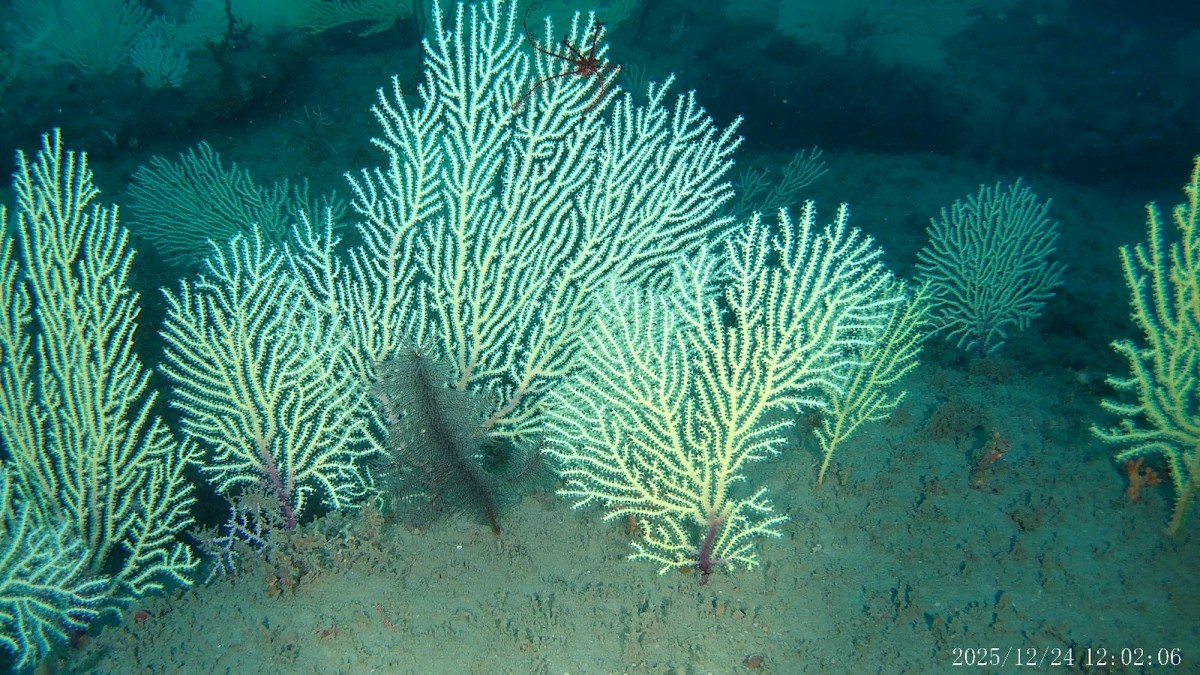
A deep-ocean coral reef off the coast of West Africa was presumed dead for nearly six decades. Now, it’s thriving.
Scientists found this unexpected ecosystem in the Gulf of Guinea. They were looking for fishing grounds in the 1960s. They saw something on their charts. They assumed it was a dead coral formation. They moved on.
Fast forward to today. A new study changes everything.
Gérard Zinzindohoué, an oceanographer at the Institut de Recherches Halieitiques et Océanologiques du Benin, led a team back to the site. Their goal? To verify the old sonar readings. The results? A living, breathing mesophotic coral ecosystem.
The Search for West Africa’s Missing Coral
The journey started with a hunch from the 1960s researchers. Back then, surveys flagged a structure on the seafloor. But the equipment wasn’t good enough to confirm what it was. Assumption ruled. It’s dead.
Half a century later, Zinzindohoué got the grant money to revisit. The search wasn’t pretty. It took days. They scanned seven miles of the ocean floor.
“It was not an easy field campaign,” Zindindohoué recalled. “It was a mix of long hours at sea, technical problems, and uncertainty.”
They finally caught two signals. Strong enough. Large enough. Could these be the reef remnants?
They dropped in a drone. Then came the Deep Sea Camera System from the National Geographic Exploration Technology Lab. The camera went down. About 165 feet deep.
The image was shocking. The reef wasn’t dead. It was teeming with life.
“I still remember seeing those first images,” Zinzindohoué said. “It was a mix of excitement and disbelief. After all this time thinking about this reef, something real was suddenly in front of us.”
Why This Mesophotic Discovery Matters
This isn’t your typical sunlit coral reef. This is a mesophotic coral ecosystem. These exist in deeper waters where sunlight is limited. They don’t always grow in one solid, continuous sheet. Instead, they form patchy, intermittent colonies.
But “patchy” doesn’t mean “empty.”
The survey revealed a surprising diversity of life hiding in the dark. The team identified:
* Eight different coral types.
* Eight species of fish.
The lineup included the Guinean angelfish (Holacanthus africanus ), the golden African snapper (Lutjanus fulgens ), and the Monrovia doctorfish (Acanthurus monroviae ).
Is this just a one-off? Unlikely.
Zinzindohoué suspects this is the first confirmed living mesophotic reef on the Gulf of Guinea’s continental shelf. But it’s probably not an isolated incident. It’s more likely a sign of how much we don’t know about these waters.
“I think what we found is probably not an exceptional case,” Zinzindohoué noted. “It reflects how little we still know about the coastal regions of West Africa and elsewhere.”
The Need for Deeper Understanding
Historical data suggests they only saw a fraction of the whole thing. The continuous reef might stretch nearly 25 miles parallel to the Benin coast.
So what now? More surveys. More funding. Better eyes on the bottom.
The ecosystem is delicate. We need to check its health, its size, and its biodiversity. Right now, we only have snapshots.
“If I had all the grant money, I would return with a proper scientific diving and sampling plan,” Zinzindohoué says. “These ecosystems are still poorly known. Every piece of information matters.”
The reef was never dead. It was just waiting to be seen.
And now that we’re looking, we’re realizing how much else is hiding in the deep. How much more has been overlooked while we were busy looking at the surface? The ocean floor is a mystery book, and we’re only on the first few pages.